The Problem Wasn’t Money. It Was Fear.
For millions of Indians, investing was never really about not having money. It was about not knowing what to do with it. Stocks looked complicated. Mutual funds came with unfamiliar jargon. Brokers felt intimidating, paperwork was frustrating, and the fear of losing hard-earned savings kept millions away from the market.
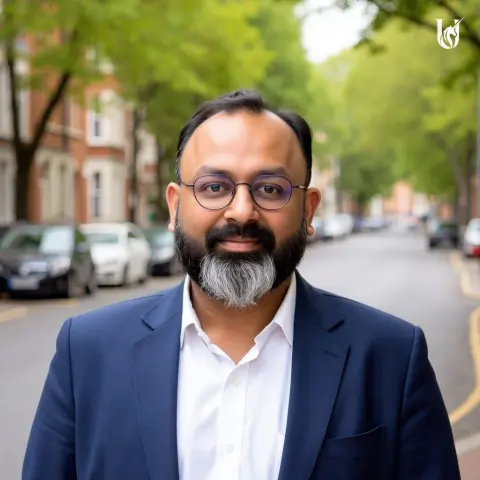
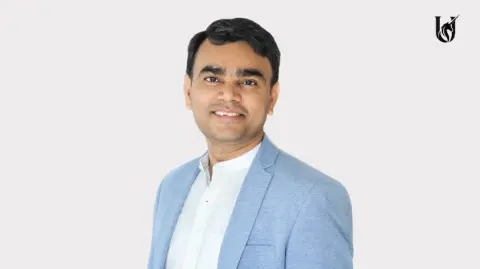
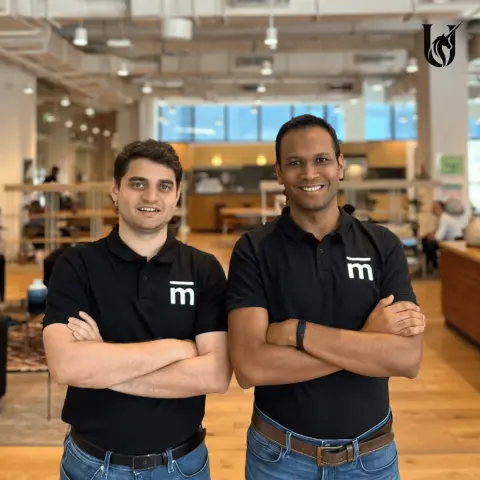
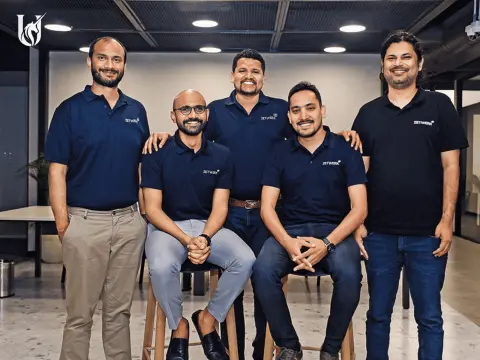
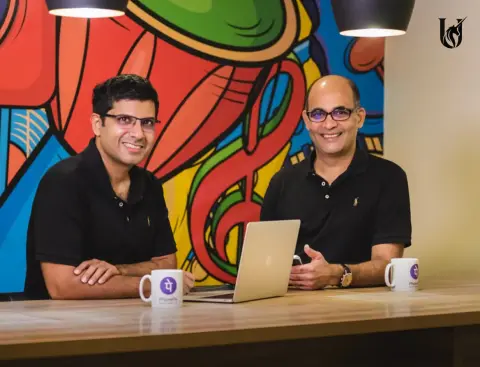
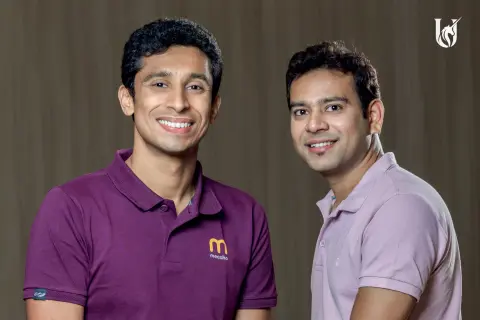
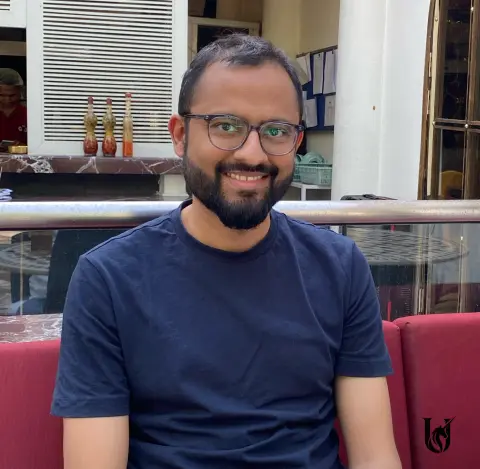
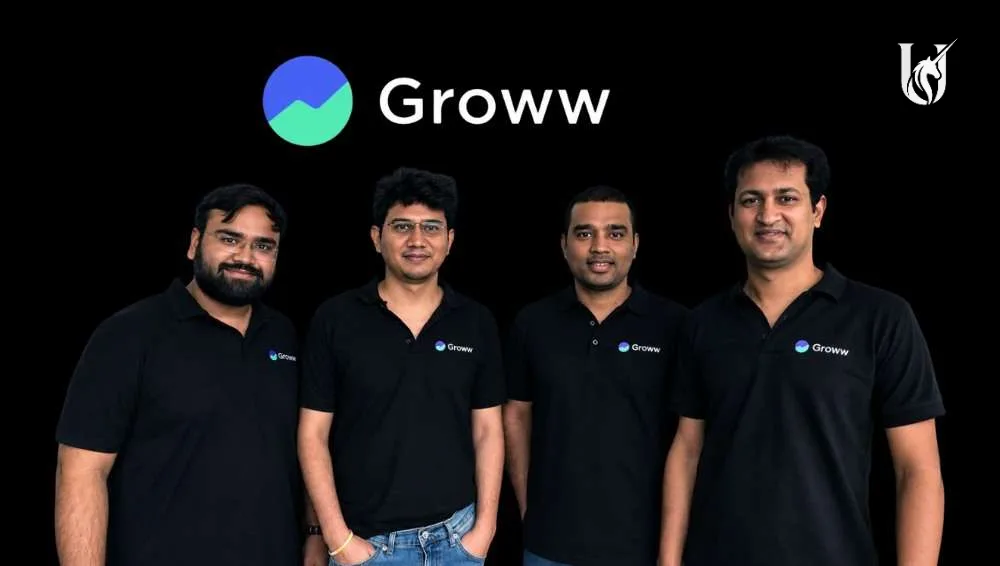
Four colleagues at Flipkart, Lalit Keshre, Harsh Jain, Ishan Bansal, and Neeraj Singh, noticed this gap and asked a deceptively simple question: What if investing could feel as easy as shopping online?
That question became the starting point of Groww.
Four Flipkart Colleagues Walked Away From Comfortable Careers
In 2016, the four founders left Flipkart with a shared belief that India’s next digital revolution would not only be about buying things online, it would be about helping people manage their money online. Their backgrounds were different, but their experience at Flipkart gave them something valuable: an understanding of how technology could remove friction from everyday decisions. They pooled their experience, took the entrepreneurial leap and began building a financial platform for people who had traditionally stayed away from investing. There was no massive branch network, no army of relationship managers and no complicated financial interface. The ambition was straightforward: make investing understandable enough for an ordinary Indian to start.
Groww Started With Mutual Funds, Not Stocks
Groww did not begin by trying to become India’s biggest stockbroker.
Its first focus was direct mutual fund investing, where the founders saw an opportunity to simplify a process that many first-time investors found intimidating. The early product was built around education as much as execution. Blogs, videos and simple explanations helped users understand financial products before asking them to put their money into them. That approach mattered.
Groww wasn't simply saying, “Invest here.” It was trying to answer the more important question: “Why should you invest at all?”
The Real Product Was Simplicity
Groww’s biggest innovation was not necessarily a new financial product. It was the way financial products were presented. Instead of making users feel like they needed a finance degree, Groww focused on clean interfaces, transparent information and a DIY investing experience. The platform gradually expanded beyond mutual funds into stocks, ETFs, digital gold, intraday trading and IPOs, following what users were asking for. The strategy was simple: enter through one financial need, earn trust, and then build a broader financial relationship.
From a Startup Experiment to a Massive Investing Community
As smartphones became the default gateway to financial services, Groww found its natural audience among young, digitally comfortable Indians. The platform attracted users who wanted to manage their own money without depending heavily on traditional intermediaries. What began as a mutual fund platform eventually became a much broader investment ecosystem, helping Groww build one of India’s largest retail investing communities. Its growth reflected a bigger change happening across India: investing was moving from the offices of financial intermediaries into the pockets of ordinary consumers.
Then Groww Entered the Stock Market
By 2020, customer demand pushed Groww into equities. This changed the scale of the opportunity. Stocks brought a much larger and more active retail audience, while Groww’s familiar mobile-first experience gave new investors an easier entry point into equity markets. The company subsequently expanded into ETFs, IPOs, digital gold, derivatives and other financial products, turning Groww from a mutual fund startup into a diversified financial platform.
The company wasn't just adding products, it was following its users as their financial ambitions grew.
The Challenge: Convincing Indians to Trust a Fintech With Their Savings
Building a financial app is fundamentally different from building an e-commerce app.
If a shopping app fails, a customer may lose time. If a financial platform gets something wrong, a customer can lose money.
That made trust, security and education central to Groww’s growth.
The founders had to simplify finance without oversimplifying risk. They had to create an experience that felt effortless while dealing with a heavily regulated industry.
And perhaps most importantly, they had to convince first-time investors that they could take control of their financial decisions themselves.
The Business Model Was Built for Scale
Groww followed a digital-first, direct-to-consumer model.
Instead of building thousands of physical branches, the company used technology to serve customers at scale. Broking eventually became its largest revenue engine, while the company continued expanding into adjacent financial businesses.
By FY25, Groww reported Rs 3,901.7 Cr in revenue and Rs 1,824 Cr in net profit, showing that its growth story was no longer dependent purely on venture capital.
That profitability became one of Groww’s strongest differentiators in India’s fintech landscape.
The Unicorn Became a Public Company
Groww’s journey eventually moved from private funding to the public markets.
Operating under Billionbrains Garage Ventures, the company made its stock-market debut on the NSE and BSE in November 2025.
The IPO raised approximately Rs 6,632 crore, while the issue was subscribed around 17.6 times.
For the four founders who had left Flipkart almost a decade earlier, the listing represented more than a financial milestone.
It was proof that a company built around making investing simpler had itself become one of India’s most closely watched financial businesses.
Groww’s Growth Didn’t Stop With Broking
Going public didn't mean Groww had reached the finish line.
The company has been expanding beyond its original broking business into credit, asset management and wealth management, attempting to build a broader financial ecosystem around its customer base.
Its acquisition of Indiabulls Mutual Fund for Rs 175 crore also marked a strategic step into the asset-management business. The logic is clear: if Groww can help a young investor buy their first mutual fund, it can potentially remain relevant as that investor moves into stocks, larger portfolios, wealth management and other financial products.
But Scale Came With New Challenges
Groww’s journey hasn't been without pressure.
Regulatory changes affecting derivatives trading created headwinds for the broader discount-broking industry, while Groww also saw active broking users decline during the period. That forced the company to look beyond trading volumes and strengthen its diversification strategy. This is an important chapter in the Groww story: growth is not simply about adding millions of users, it is about remaining valuable when the market changes.
The Numbers Behind the Groww Empire
Groww's financial scale today tells a very different story from its early days.
In Q1 FY27, the company reported operating revenue of approximately Rs 1,501 crore, up 66% year-on-year, while consolidated profit after tax jumped 94.3% to Rs 735 Cr. Its market capitalisation has also climbed dramatically following its public listing, reaching roughly Rs 1.2 lakh crore-plus in August 2026 based on the market value cited in the supplied data. The numbers demonstrate how dramatically India's retail-investing landscape has changed, and how successfully Groww positioned itself at the centre of that transformation.
The Founder’s Vision Was Bigger Than a Trading App
For Lalit Keshre and the founding team, Groww was never meant to be just another brokerage platform. The broader vision was to make wealth management accessible to people who had historically felt excluded from it. Their core insight was powerful: India didn't necessarily need more complicated financial products. It needed better ways to understand and access them.
That philosophy shaped Groww's product design, educational content and customer experience from the beginning.
From Four Founders to a Financial Institution
What makes Groww’s journey particularly interesting is the transition it has undergone. It started as a startup built by four former Flipkart employees. Then it became a venture-backed unicorn. Then it became a profitable fintech. And finally, it became a publicly traded financial company with ambitions extending beyond broking.
The identity changed at every stage, but the central idea remained remarkably consistent: make money management simpler for the next generation of Indian investors.
What Groww Really Changed in India
Groww didn't invent investing.
It changed the experience of investing.
It helped make words like SIP, stocks, ETFs and IPOs part of everyday digital conversations among younger Indians.
A generation that once watched the stock market from the sidelines increasingly began opening accounts, researching companies and managing portfolios directly from smartphones.
That cultural shift may ultimately prove more significant than any individual product Groww launched.
The Bigger Lesson: Solve Confusion, Not Just a Market Gap
The Groww story offers a lesson that goes beyond fintech.
Great businesses don't always begin by discovering something nobody has seen before. Sometimes, they succeed by taking something people already need and removing the frustration around it.
Groww saw that investing existed, but accessibility didn't.
It saw that financial products existed, but understanding was missing.
And it realised that if technology could make investing feel less intimidating, millions of people might finally take the first step.
Groww’s Journey in One Line
Four ex-Flipkart colleagues left secure careers in 2016, started by simplifying mutual funds, expanded into the entire investing journey, and built Groww into one of India’s largest and most valuable fintech platforms.
The most powerful part of Groww’s story isn't the IPO, the unicorn valuation or the Rs 1 lakh crore-plus market cap.
It is the original insight behind everything:
When you make something complicated feel simple, you don't just build a product, you can build a habit, a cocommunity and eventually an entire category.