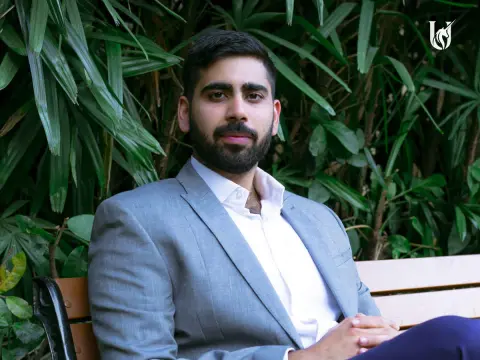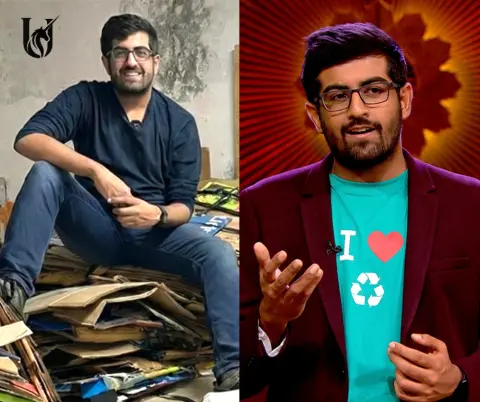

There was a time when Anubhav Dubey was preparing for the UPSC exam in Delhi, hoping to become an IAS officer. Today, his name is linked with Chai Sutta Bar, one of India’s most recognisable tea-cafe brands. But the journey did not begin with a big office, investors or a carefully designed business plan. It began with two friends, around Rs 3 lakh, second-hand furniture and a small tea outlet in Indore. The biggest turning point in Anubhav’s life came when one more failure made him question what he really wanted. Instead of trying to fit into a career chosen by expectations, he decided to build something of his own.
That decision eventually turned a small tea stall into a large franchise-led business.
A Small-Town Boy With Big Expectations
Anubhav Dubey was born in 1996 in Rewa, Madhya Pradesh, in a middle-class family. His father was involved in real estate, and like many families, his parents wanted him to build a stable and respected career.
For Anubhav, the early dream was not entrepreneurship. He explored several conventional paths, including IIT, IIM, CA and eventually the UPSC civil services examination. He moved to Indore for his education and later went to Delhi to prepare for UPSC. He studied, worked hard and tried to make the dream happen, but the result was not what he hoped for.
What looked like failure at the time would eventually push him toward a completely different life.
The Call That Changed His Direction
While preparing for UPSC, Anubhav remained connected with his old friend Anand Nayak. The two had known each other for years and had already spoken about doing something together.
Then came the conversation that changed everything. As Anubhav began to realise that clearing UPSC was becoming uncertain, the two friends started discussing their business idea more seriously. They did not have a large amount of money or a proven business model. What they had was the willingness to take a chance.
For Anubhav, the question was no longer only, “What if I fail?” It became, “What if I never try?”
Chai Sutta Bar Started With Just Rs 3 Lakh
In 2016, Anubhav and Anand decided to open a tea outlet in Indore. Their starting capital was around Rs 3 lakh, tiny compared with the money usually associated with building a large cafe chain. They could not afford expensive interiors, fancy furniture or a large marketing campaign. They used second-hand furniture and borrowed whatever they could from friends. Even the first signboard reflected how little money they had. Instead of paying for a polished branded board, the founders reportedly used a piece of wood and wrote “Chai Sutta Bar” on it themselves.
There was no guarantee that anyone would come. They simply opened the doors and waited.
The First Customers Came Slowly
The first days were not glamorous. A new tea stall beside a hostel was hardly enough to convince people that a major business was being built. But Anubhav and Anand understood something important: they did not need to sell an expensive product. They needed to make ordinary chai feel different. They began serving tea in traditional kulhads and experimented with flavours that could attract younger customers. The space was informal, affordable and designed around conversations, friends and college life.
Slowly, customers started returning. Then they started bringing their friends.
Why Kulhad Became More Than a Cup
The kulhad became one of Chai Sutta Bar’s most recognisable elements.
Instead of presenting chai like another beverage inside a modern cafe, the brand connected the experience with something deeply familiar to Indian consumers. The earthen cup gave the tea a distinct look, while the low price made the experience accessible to students and young customers. That combination became important to the brand: traditional Indian chai, a youthful cafe environment and prices that did not feel intimidating. The founders were not trying to make tea complicated. They were trying to make people enjoy a simple cup of chai differently.
From Being Mocked to Getting Noticed
Leaving a UPSC preparation path to sell tea was not an easy decision.
Anubhav has spoken about the self-doubt he faced before starting Chai Sutta Bar. There was always the fear that if this attempt also failed, he would have another failure to explain. People around him also questioned the decision. For someone preparing for one of India's most respected government examinations, opening a tea shop could easily look like a step backwards.
But Anubhav and Anand continued. As the outlet became busier and word spread around Indore, the criticism slowly began turning into curiosity. The same decision that once looked risky was beginning to look like an opportunity.
The Brand Found Its Audience
Chai Sutta Bar's early success came from understanding who it wanted to serve.
Students and young people wanted an affordable place to sit, talk and spend time with friends. Tea was already part of their daily lives, so the brand did not need to create a new habit. It simply created a new setting around an old habit. Flavoured chai, kulhads, affordable pricing and a casual atmosphere gave customers something they could remember. That helped turn the first outlet from a small experiment into a repeatable business idea.
The Franchise Model Changed the Scale
The biggest jump in Chai Sutta Bar's growth came through franchising.
Rather than opening and funding every outlet itself, the company developed a franchise-led model in which partners could invest in individual stores while operating under the Chai Sutta Bar brand. This allowed the company to expand into more cities without carrying the full cost of every new location. The model also gave franchise partners access to an established brand, training, operational support and supply-chain systems. What began as a Rs 3 lakh experiment could now be replicated across different markets.
From One Outlet to Hundreds of Stores
The numbers changed dramatically over the years. The brand reportedly had around 100 outlets by 2019, while its turnover was said to have reached roughly Rs 50 Cr. By 2022, the network had crossed 300 outlets. The company continued expanding across India, with later figures putting its network at more than 550 outlets and, according to company-provided figures, over 650 outlets across hundreds of cities. Its growth was not built around making chai a luxury product. It was built around taking a familiar product into more neighbourhoods and creating a consistent experience. The small tea stall in Indore had become a national franchise brand.
Millions of Kulhads, Thousands of Stories
Chai Sutta Bar's scale can also be understood through its daily consumption.
The company has reported selling lakhs of kulhads across its network, with figures cited at around 4.5 lakh kulhads a day in 2024. That number represents more than cups of tea. Each cup means a student meeting a friend, a group spending an evening together, or someone stopping for a quick chai after work. This everyday nature of the product became one of the brand's biggest strengths. Tea was not an occasional purchase. It was something people could come back for again and again.
A Business Built Without the Typical Startup Route
Chai Sutta Bar's journey is different from many Indian startup stories. There was no headline-making early venture round that funded hundreds of stores. The business began with the founders' own small investment and later used franchising as a major engine of expansion. That meant the founders had to think carefully about the store format, customer experience, supply chain and economics. The approach was simple: build something that worked in one location, make the model repeatable and then allow partners to take it into new markets.
For a business that started with Rs 3 lakh, keeping the expansion model asset-light became an important part of the journey.
Taking Indian Chai Beyond India
Once the brand established itself across India, Chai Sutta Bar also began looking beyond the domestic market. The company has expanded into international markets including Nepal, the UAE and Canada. The idea travels naturally because Indian chai has a strong cultural connection with Indians living abroad, while the kulhad gives the experience an instantly recognisable Indian identity. International expansion also showed that the brand was no longer just an Indore success story. It had become a consumer brand built around an everyday Indian habit.
The People Behind the Brand
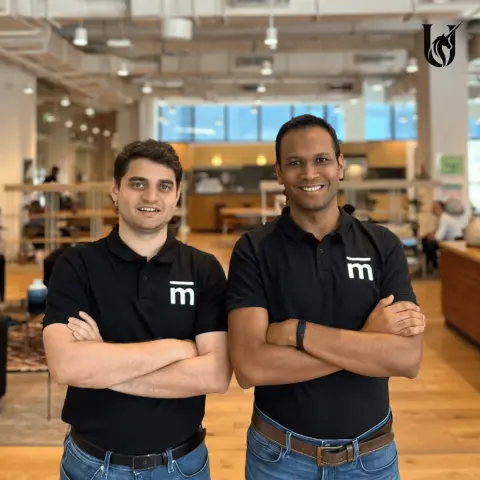
Anubhav Dubey founded Chai Sutta Bar with Anand Nayak, his longtime friend and business partner. Rahul Patidar later joined the venture as another co-founder, adding to the leadership team that helped build the company. Together, they turned a basic tea-shop idea into a franchise system operating across multiple cities and countries. The founders' biggest advantage was perhaps not money, but the willingness to stay close to the customer and keep improving a simple idea.
Recognition Came After the Risk
The journey eventually brought recognition that Anubhav could not have imagined during his UPSC preparation days. He was recognised in the Forbes 30 Under 30 list in 2020 and received other entrepreneurial recognition as the brand expanded. But for someone who once worried about not receiving awards or recognition, the more important achievement was perhaps the business itself. The awards came after the work. The customers came before them. And that distinction remains an important part of Anubhav's story.
What Is Chai Sutta Bar Worth?
Chai Sutta Bar has been described in various media and company-related reports as a business with a turnover running into more than Rs 100 crore, while other figures have put brand turnover above Rs 150 crore in later years. However, a reliable, publicly disclosed current valuation of the privately held company is not readily available. That makes it difficult to attach a precise “company worth” figure without mixing revenue, brand value and valuation, three very different numbers. What can be clearly seen is the scale of the business: hundreds of outlets, a large franchise network, international expansion and millions of customer transactions.
Anubhav Dubey's Net Worth
Anubhav Dubey's exact personal net worth has not been publicly disclosed through a reliable audited source. Various websites and online reports publish estimates, but these figures can differ widely and should not be treated as confirmed wealth. His business journey, however, is much easier to measure. From a Rs 3 lakh starting investment and an uncertain future, he became the co-founder of a large tea-cafe network that created opportunities for franchise partners, employees and the potter families supplying its kulhads. The numbers tell the scale. The journey explains how he got there.
The Bigger Story Behind Chai Sutta Bar
Anubhav Dubey's story is not really about tea. It is about what happens when a person stops measuring success only through traditional milestones. IIT did not happen. IIM did not happen. UPSC did not happen. But none of those failures ended the story. Instead, one difficult phase led Anubhav to a conversation with a friend, that conversation led to a Rs 3 lakh tea stall, and that tea stall eventually became Chai Sutta Bar. Sometimes the road you did not plan becomes the road that changes your life.
Key Numbers Behind Anubhav Dubey's Journey
- 1996: Anubhav Dubey was born in Rewa, Madhya Pradesh
- 2016: Chai Sutta Bar started in Indore
- Rs 3 lakh: Approximate initial investment
- 2017: Rahul Patidar joined as a co-founder
- 2019: Around 100 outlets and roughly Rs 50 crore turnover were reported
- 2022: Network crossed 300 outlets
- 2020: Anubhav was recognised in Forbes 30 Under 30
- 2024: Network figures crossed 550 outlets, with other company figures later reporting 650+ outlets
- 4.5 lakh: Reported daily kulhad consumption across the network
- International markets: Nepal, UAE and Canada among the reported overseas markets
What Anubhav Dubey's Journey Teaches
Anubhav's story shows that failure does not always mean that a person is moving in the wrong direction. Sometimes it forces them to look at a path they would never have considered otherwise. The founders also understood the power of starting small. They did not wait for perfect interiors, huge funding or a famous brand name. They took something as ordinary as chai and gave it a recognisable identity. Most importantly, they kept going when the first version of the dream did not work.
From UPSC Dreams to a Tea Empire
Anubhav Dubey once travelled to Delhi with the dream of becoming an IAS officer. Instead, his life took him back to entrepreneurship, where he and Anand Nayak built a tea brand from almost nothing. The first outlet had second-hand furniture, a handwritten signboard and very little money behind it. Years later, Chai Sutta Bar had hundreds of outlets, an expanding franchise network and an international presence. His story is a reminder that success does not always arrive through the door you are waiting for.
Sometimes, you have to build another door yourself.