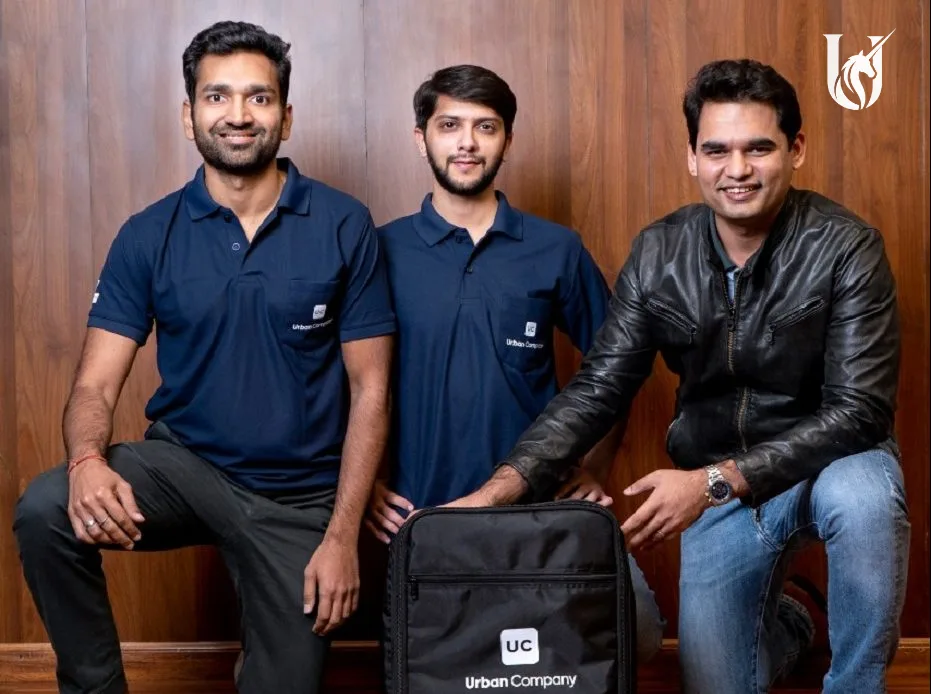
Introduction: Three Failures. One Bold Bet. A Company That Changed Millions of Homes.
Every successful startup begins with an idea. But every great company begins with a problem that everyone else has learned to live with.
In India, booking a plumber, electrician, beautician or carpenter was once an unpredictable experience. Prices changed from one visit to another. Service quality depended on luck. Professionals had no structured career path, while customers had no reliable platform they could trust.
Most people accepted it as part of everyday life.
Three entrepreneurs didn't.
Before building one of India's most valuable consumer technology companies, Abhiraj Singh Bahl, Varun Khaitan and Raghav Chandra had already experienced failure. Their earlier ventures had shut down, investors weren't convinced, and success seemed farther away than ever. But instead of giving up, they chose to learn from every setback.
That decision eventually transformed a simple home-services marketplace called UrbanClap into Urban Company, a technology-driven platform that has redefined home services across India and international markets.
Today, Urban Company serves millions of customers, empowers tens of thousands of service professionals, operates across multiple countries, and has built a brand valued at nearly Rs 25,000 crore. Its journey proves that extraordinary businesses don't always emerge from revolutionary inventions. Sometimes, they begin by fixing the small frustrations people experience every single day.
This is the remarkable story of three entrepreneurs who failed before they succeeded, and built one of India's biggest consumer internet companies.
The Founders Who Refused To Let Failure Define Their Future
Long before Urban Company became a household name, its founders were simply ambitious young professionals trying to build something meaningful.
Abhiraj Singh Bahl and Varun Khaitan first met while studying at IIT Kanpur. Both shared an entrepreneurial mindset and believed they would eventually create a company of their own.
After graduation, their careers followed impressive paths.
Abhiraj pursued an MBA at IIM Ahmedabad before joining Boston Consulting Group (BCG), where he worked with large businesses and developed a deep understanding of strategy and operations.
Varun joined Qualcomm in California before returning to India, where he also became part of Boston Consulting Group.
Meanwhile, Raghav Chandra, a computer science graduate from the University of California, Berkeley, was building technology products and dreaming of becoming an entrepreneur.
All three possessed excellent academic credentials and promising corporate careers. Yet none of them felt fulfilled working for someone else's vision.
They wanted to build something of their own.
The Startup Failures That Became Their Greatest Teachers
Entrepreneurship rarely follows a straight road. Before Urban Company, every founder had already experienced disappointment.
Abhiraj and Varun launched a startup called Cinema Box, hoping to capitalize on digital entertainment. Despite months of hard work, the business failed to gain traction and eventually shut down. Around the same time, Raghav was working on Buggy, a mobility startup launched before ride-hailing became mainstream in India.
His venture also failed.
For many founders, two failed startups would have been enough reason to return permanently to corporate life. But failure taught them something no classroom ever could. It showed them how difficult it was to build products people truly needed. It taught them that timing matters, Execution matters, Customer experience matters even more.
Most importantly, they realised that success isn't about having the smartest idea. It's about solving the right problem. That realization changed everything.
The Problem Hidden Inside Every Indian Household
In 2014, India's digital economy was growing rapidly.
Food delivery apps were emerging. Cab aggregators were transforming transportation. E-commerce companies were changing retail. Yet one massive industry remained almost completely unorganized.
Home services. Whether someone needed an electrician, AC technician, beautician or carpenter, the experience was frustratingly similar. Finding a trustworthy professional required endless phone calls and personal references, Pricing lacked transparency, Appointments were unreliable, Quality varied dramatically, Customers had no guarantees.
Service professionals, on the other hand, faced an entirely different struggle.
Despite possessing valuable skills, many depended solely on local contractors who kept a significant share of their earnings. Their income remained unpredictable, and they had limited opportunities to grow. The founders realised this wasn't simply a technology problem, It was a trust problem.
And trust was something technology could help build.
The Birth Of UrbanClap
In October 2014, the three founders launched UrbanClap from Gurugram with one simple objective:
Make booking home services as easy as ordering food online.
Initially, the platform acted as a marketplace connecting customers with nearby professionals. The idea attracted attention almost immediately. Consumers appreciated the convenience. Professionals saw an opportunity to reach more customers. Investors recognised the enormous market potential. However, as transactions increased, the founders discovered a serious flaw. Simply connecting customers and professionals wasn't enough. The overall experience remained inconsistent. Some professionals delivered exceptional service. Others disappointed customers. A marketplace alone couldn't guarantee quality. And without trust, the business would never scale. This became the biggest turning point in Urban Company's journey.
Instead of remaining just another listing platform, the founders completely redesigned the business model. Rather than merely introducing customers to professionals, UrbanClap decided to own the customer experience itself. It would train professionals, standardize pricing, create operating procedures, monitor customer ratings, and invest in technology.
And ensure that every service met a consistent quality benchmark. This decision fundamentally changed the company's future.
UrbanClap was no longer building a marketplace. It was building India's most trusted home-services brand.
Winning Trust Before Chasing Growth
Building trust required far more than a mobile application. The company invested heavily in onboarding and training thousands of service professionals. Every plumber, electrician, beautician or appliance technician joining the platform underwent quality assessments before becoming part of the network. Professionals also received customer-service training, something rarely seen in India's traditional home-services industry.
The company introduced standardized pricing, digital payments, verified identities, customer reviews and service warranties. For customers, this removed uncertainty. For professionals, it created something even more valuable: a stable source of income, repeat business and professional respect. UrbanClap wasn't just changing how people booked services.
It was changing how service professionals built careers. That vision became the foundation of one of India's fastest-growing consumer startups.
From a Startup Marketplace to a Rs 25,000 Crore Global Unicorn
Building a Business Around Trust, Not Transactions
Most marketplaces measure success by the number of transactions they facilitate. UrbanClap's founders believed that wasn't enough. They knew that if customers had one bad experience, they might never return. The only way to build a lasting business was to take responsibility for the entire service experience.
The company gradually shifted from being a simple aggregator to becoming a technology-led service platform. Every service professional who joined the platform went through background verification, technical assessments, and structured training. Standard operating procedures were introduced across every category, from beauty services and appliance repairs to deep cleaning and plumbing. Uniform pricing, digital payments, customer ratings, and service warranties became the foundation of the business.
This quality-first approach helped UrbanClap earn something far more valuable than rapid downloads, it earned customer trust. A satisfied customer didn't just return; they became the company's biggest marketing channel by recommending the platform to friends and family.
The Funding That Turned Vision Into Scale
A strong business model soon attracted the attention of leading investors.
In 2015, UrbanClap raised its first institutional funding, giving the founders the confidence to invest aggressively in technology, operations, and expansion. Over the next few years, the startup continued raising capital from marquee global investors who believed that India's home-services market was ready for disruption.
Unlike many startups that spent heavily on customer acquisition alone, UrbanClap invested equally in building supply. The company understood that without highly skilled professionals, no amount of marketing could create a sustainable business.
The fresh capital was used to strengthen its technology platform, improve partner training, launch new service categories, and expand into more Indian cities. Every funding round brought not just money, but strategic guidance that helped the company mature into a category leader.
Scaling Beyond Metro Cities
After establishing itself in major metropolitan markets like Delhi NCR, Mumbai, Bengaluru, Hyderabad, Chennai, and Pune, UrbanClap expanded rapidly across India.
Its growth strategy was disciplined rather than reckless.
Instead of entering every city overnight, the company focused on maintaining service quality before expanding further. This allowed UrbanClap to preserve customer satisfaction even while scaling operations. Within a few years, the platform had grown from a small startup into India's largest organized home-services marketplace. Thousands of service professionals relied on the platform as their primary source of income, while millions of customers had replaced traditional offline bookings with digital convenience. For many households, UrbanClap became the first choice whenever an appliance broke down, a salon visit wasn't possible, or a home needed professional cleaning.
Empowering Service Professionals, Not Just Customers
One of Urban Company's biggest innovations wasn't technology, it was creating entrepreneurship opportunities for skilled workers. Traditionally, plumbers, electricians, beauticians, and technicians depended on local contractors or word-of-mouth referrals for work. Income was uncertain, and opportunities for professional growth were limited.
UrbanClap changed that equation.
Service partners received regular training, access to modern equipment, digital tools, customer feedback, and performance-based incentives. Many professionals who had once struggled to earn a stable monthly income began building sustainable businesses through the platform. The company didn't simply create jobs, it formalized an industry that had operated informally for decades.
By improving earnings, enhancing skills, and giving professionals direct access to customers, UrbanClap elevated the status of thousands of blue-collar workers across the country. This partner-first philosophy became one of the strongest pillars of the company's long-term success.
A New Name for a Bigger Vision
By 2020, UrbanClap had outgrown its original identity.
The founders no longer wanted the company to be perceived as just another marketplace. Their ambition had evolved far beyond connecting customers with professionals.
They envisioned building a global consumer brand centered on trusted home services. To reflect this broader vision, UrbanClap officially rebranded as Urban Company. The new identity was simple, memorable, and better suited for international markets. More importantly, it represented the company's transformation, from an app that connected people to a brand that owned the complete customer experience.
The rebranding also signaled the beginning of Urban Company's next chapter, global expansion.
Taking an Indian Startup Global
With a proven model in India, Urban Company began entering international markets.
The company expanded into the United Arab Emirates, Singapore, and Australia, adapting its technology and operational processes to local consumer preferences. While every market presented unique challenges, the company's focus remained unchanged: deliver reliable, standardized, and high-quality home services.
International expansion was never just about increasing revenue. It was about proving that an Indian technology company could build a globally respected consumer brand.
Competing in developed markets required higher service standards, stronger operational discipline, and continuous innovation. Urban Company embraced these challenges, further strengthening its systems and processes.
Becoming a Unicorn
Years of disciplined execution culminated in one of the biggest milestones in the startup's journey.
In 2021, Urban Company officially entered India's unicorn club after achieving a valuation exceeding $1 billion. It was a defining moment, not just for the founders, but also for thousands of service professionals whose livelihoods had grown alongside the platform.
The unicorn status validated years of hard work, strategic execution, and an unwavering commitment to solving everyday problems. Yet, for the founders, valuation was never the destination. It was simply another milestone in a much longer journey. Over the following years, investor confidence continued to grow, and Urban Company's valuation climbed significantly, reflecting its leadership position in India's home-services industry.
Navigating Losses While Building for the Long Term
Like many technology companies focused on long-term growth, Urban Company faced financial challenges.
The company invested heavily in technology, partner training, customer acquisition, and geographic expansion. These investments impacted short-term profitability but strengthened the business for the future. Rather than chasing quick profits, the founders focused on creating a scalable operating model capable of generating sustainable value over time. Operational efficiencies, better unit economics, and disciplined execution gradually improved the company's financial performance. The business demonstrated that strategic investments, when made with patience and clarity, could create a stronger foundation for long-term success.
This ability to balance growth with operational discipline distinguished Urban Company from many startups that struggled to build sustainable businesses.
More Than a Startup-A Category Creator
Urban Company didn't merely digitize home services. It fundamentally changed consumer expectations.
Today, booking a plumber, beautician, electrician, AC technician, or house cleaner through a smartphone feels completely natural. Yet, just a decade ago, such convenience hardly existed. The company created standardized pricing where there was uncertainty, accountability where there was inconsistency, and professionalism where there had long been informality.
In doing so, Urban Company transformed an unorganized industry into a trusted digital ecosystem, one that continues to reshape how millions of people experience home services every day.
From Unicorn to IPO - The Journey Continues
Preparing for the Biggest Milestone Yet
For most startups, becoming a unicorn is considered the ultimate achievement. For Urban Company, it was only the beginning.
After establishing itself as India's largest technology-enabled home services platform, the company's focus shifted toward building a sustainable public company. Years of investments in technology, operations, partner training, and customer experience had created a strong foundation. The next logical step was to invite public investors to become part of its journey.
Urban Company's Initial Public Offering (IPO) marked a defining chapter in the company's evolution. The listing was more than a fundraising exercise, it represented the market's confidence in a business that had transformed an unorganized industry into a trusted digital ecosystem. For the three founders, it was proof that a problem once dismissed as "too small" had evolved into one of India's most valuable consumer internet businesses.
The IPO also reflected a broader shift in India's startup ecosystem. Investors were no longer looking only at user growth or app downloads. They wanted companies with strong governance, disciplined execution, improving unit economics, and a clear path toward sustainable profitability. Urban Company had spent years preparing for exactly that.
Building a Brand That Millions Trust
Technology helped Urban Company scale, but trust built its brand. From the beginning, every business decision revolved around one simple question:
"Will this improve the customer's experience?"
Whether it was introducing transparent pricing, verified professionals, standardized operating procedures, digital payments, service warranties, or customer ratings, the company consistently removed friction from the booking experience. The result was remarkable. Millions of Indian households gradually replaced uncertainty with convenience. Instead of relying on random referrals or neighbourhood contacts, customers could now book trusted professionals within minutes.
Urban Company didn't simply become another app on people's phones. It became the first name they remembered whenever something at home needed fixing. That level of brand recall cannot be purchased through advertising alone, it must be earned through consistent execution.
Empowering India's Largest Workforce
Perhaps Urban Company's greatest contribution lies beyond revenue and valuation. The platform helped formalize one of India's largest informal employment sectors. Before Urban Company, many skilled professionals worked independently with unpredictable incomes and limited growth opportunities. They possessed technical expertise but lacked access to customers, financial stability, and structured career development.
Urban Company changed that equation.
By providing technology, training, standardized pricing, financial support, insurance benefits, digital tools, and continuous skill development, the company enabled thousands of professionals to build independent businesses under a trusted national brand. Many service partners witnessed significant improvements in their monthly earnings, while also gaining dignity and professional recognition in careers that had historically remained unorganized.
In many ways, Urban Company became as much an employment platform as a technology company.
Innovation Beyond Home Services
Rather than limiting itself to being a marketplace, Urban Company gradually expanded its ecosystem. The company invested heavily in artificial intelligence, predictive scheduling, customer support automation, quality control systems, and partner productivity tools. It also entered adjacent categories by introducing professional-grade consumer products designed specifically for home services. These initiatives reflected the founders' long-term vision. Their ambition was never just to connect customers with professionals.
It was to build the world's most trusted home-services brand, powered equally by technology, operational excellence, and human expertise.
Leadership Built on Learning, Not Ego
One reason Urban Company continued growing was the founders' willingness to evolve. Their first startups had failed because they believed having a good product was enough. Urban Company taught them that building a successful company requires far more. It requires listening to customers. Respecting frontline workers. Improving systems continuously. Making difficult decisions quickly. And remaining humble even after achieving success.
Throughout the company's journey, Abhiraj Singh Bahl, Varun Khaitan, and Raghav Chandra consistently emphasized execution over hype. Instead of chasing headlines, they focused on solving operational challenges that most consumers never even noticed.
That quiet discipline became one of Urban Company's greatest competitive advantages.
From Startup Dream to Rs 25,000 Crore Enterprise
In just over a decade, Urban Company achieved what very few Indian startups have accomplished. What began as an idea born inside a Gurgaon apartment evolved into one of India's most valuable technology companies. Today, the platform operates across multiple countries, serves millions of customers, partners with tens of thousands of service professionals, and continues expanding into new categories. Its journey demonstrates that enormous businesses don't always emerge from futuristic technologies. Sometimes they emerge by solving ordinary problems extraordinarily well. The company transformed broken customer experiences into standardized services. It replaced uncertainty with trust. It professionalized an informal industry.
And it created opportunities for thousands of entrepreneurs who never imagined technology could change their lives. Urban Company is no longer simply a startup. It has become a defining chapter in India's digital economy.
5 Entrepreneurial Lessons from Urban Company's Journey
1. Failure Is Often the Best Business School
Before Urban Company, every founder had already experienced unsuccessful ventures. Those setbacks provided lessons that no business school could teach. Failure sharpened their judgment, strengthened their resilience, and prepared them for a far bigger opportunity.
2. Solve Everyday Problems at Scale
Not every billion-dollar company starts with breakthrough technology. Urban Company succeeded because it solved a daily frustration experienced by millions of households.
3. Trust Creates Long-Term Businesses
Customers don't return because an app is attractive. They return because every experience is reliable. Urban Company's obsession with quality transformed trust into its strongest competitive advantage.
4. Build for Both Sides of the Marketplace
Urban Company invested as much in its service professionals as it did in its customers. When partners succeed, customers receive better service. When customers are satisfied, the platform grows. That balance created a powerful flywheel.
5. Sustainable Growth Beats Fast Growth
The founders resisted expanding recklessly. Instead, they focused on operational excellence, consistent quality, and disciplined execution. That patience ultimately built a stronger company.
Conclusion: Success Doesn't Begin With a Billion-Dollar Idea
Urban Company's story reminds us that entrepreneurship is rarely about inventing something completely new. It's about observing everyday life closely enough to notice problems everyone else ignores. Three founders who had already experienced failure refused to let disappointment define their future. Instead, they built a company around one simple belief:
If you solve a real problem better than anyone else, success eventually follows.
From failed startups to one of India's biggest unicorns, Urban Company's journey proves that resilience, customer obsession, disciplined execution, and continuous innovation can transform even the simplest idea into an extraordinary business. For aspiring entrepreneurs, the message is powerful. Your first idea may fail. Your second attempt may disappoint. But if you keep learning, keep improving, and keep solving meaningful problems, your biggest success may still be waiting ahead. Because history rarely remembers the number of times a founder failed.
It remembers the one company they finally built that changed an entire industry forever.
ages, headings, quotes and embedded media.