
Success rarely follows a straight path. For every entrepreneur who reaches the top, there are years of rejection, uncertainty, and lessons learned the hard way. Aman Gupta’s journey is one of the finest examples of this reality. Today, he is recognized as the co-founder of boAt, one of India's largest consumer electronics brands and one of the most popular faces on Shark Tank India. But long before the fame, funding, and billion-rupee valuations, Aman was simply a young man searching for work, trying different careers, and struggling to find his true calling.
His story is not about overnight success. It is about resilience, continuous learning, and believing in an idea when very few people believed in you. From facing job rejections and shutting down multiple ventures to building a brand that competes with global electronics giants, Aman Gupta proved that persistence often matters more than perfection.
Founder's Vision: Building a Global Lifestyle Brand for Young India
When Aman Gupta entered the consumer electronics industry, he noticed a major gap in the Indian market. Audio accessories were either too expensive because they belonged to international premium brands or too cheap with poor quality and almost no design appeal. There was hardly any Indian brand that understood what young consumers actually wanted.
Instead of competing on price alone, Aman envisioned a brand that combined premium quality, stylish design, affordability, and youth-centric branding. He believed headphones and speakers were no longer just electronic gadgets, they had become fashion accessories and lifestyle products.
His goal wasn't simply to sell earphones or speakers. He wanted to build an aspirational Indian brand that young consumers would proudly wear, recommend, and connect with emotionally.
That vision eventually became boAt.
Company Background: The Birth of boAt
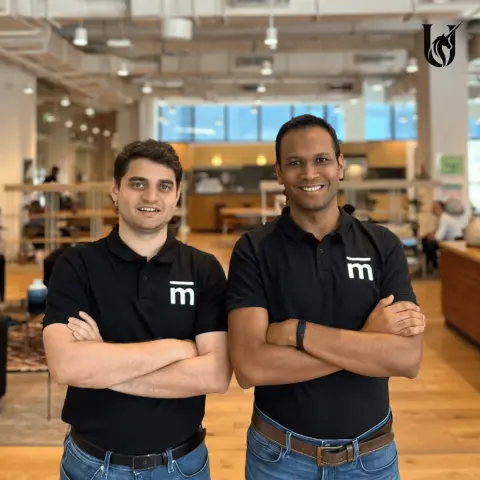
Imagine Marketing Services, the parent company of boAt, was founded in 2016 by Aman Gupta and Sameer Mehta with an initial investment of around Rs 30 lakh. The company began from a modest co-working space in Hauz Khas, Delhi, while Sameer managed operations from Mumbai.
Unlike many startups that launch with dozens of products, boAt started with a simple category, durable charging cables. The founders had observed that smartphone users, particularly iPhone owners, frequently complained about fragile charging cables that broke easily.
Instead of trying to solve every consumer electronics problem, boAt solved one problem exceptionally well.
The success of its charging cables gave the founders confidence to expand into earphones, headphones, Bluetooth speakers, smartwatches, and other wearable devices.
This gradual expansion helped the company build trust before entering larger product categories.
Aman Gupta's Journey Before Entrepreneurship
Behind every successful entrepreneur lies years of preparation that often go unnoticed.
Born on March 4, 1982, in Delhi, Aman Gupta grew up in a middle-class family where education and financial stability were considered priorities. Following his father's advice, he pursued Chartered Accountancy and became one of the youngest candidates to clear the CA examination.
Although he achieved professional success early, he soon realized that the profession did not excite him. After working in corporate jobs for a few years, he found himself searching for something more meaningful.
He later pursued an MBA from the Indian School of Business and completed executive education at Kellogg School of Management in the United States. These experiences broadened his understanding of business strategy, finance, branding, and consumer behaviour.
His corporate career also included working with brands like JBL, where he gained valuable insights into product management, distribution, and India's consumer electronics market.
Looking back, every role prepared him for the entrepreneurial journey ahead.
The Early Struggles That Built His Entrepreneurial Mindset
Before boAt became a household name, Aman Gupta experienced multiple failures.
He experimented with several business ideas that never succeeded. Some ventures failed because of poor execution, while others struggled to find product-market fit.
Instead of seeing these failures as defeats, Aman treated them as practical business education.
Every failed startup taught him something valuable about customer behaviour, cash flow management, branding, partnerships, and market timing.
These experiences later became one of boAt's greatest competitive advantages.
As Aman has often shared, success is rarely built by avoiding failure; it is built by learning from it.
Challenges: Building boAt in a Highly Competitive Market
Launching an electronics brand in India was never going to be easy.
The market was already dominated by established global companies with larger budgets, stronger supply chains, and greater consumer trust.
The founders also faced manufacturing challenges, as a significant portion of production depended on overseas suppliers. Geopolitical tensions and the COVID-19 pandemic further disrupted supply chains, delaying production and increasing operational costs.
At the same time, competition intensified as more brands entered India's rapidly growing wearable and audio accessories market.
Despite these challenges, Aman focused on what mattered most, building products customers genuinely loved.
Rather than competing solely on pricing, boAt invested in product quality, stylish design, branding, and customer experience.
That strategy helped the company stand out in an overcrowded market.
Growth Story: How boAt Became India's Favourite Audio Brand
boAt's growth was driven by a simple philosophy: listen to customers before asking customers to listen to your brand.
The company constantly studied user feedback and quickly improved its products based on changing consumer preferences.
Instead of building products in isolation, boAt developed products that reflected how young Indians actually used technology.
The brand also understood that millennials and Gen Z consumers cared as much about design as functionality.
Its colourful headphones, premium finishes, stylish packaging, and affordable pricing created an emotional connection with consumers.
Within just a few years, boAt became India's leading wearable and audio accessories brand while also ranking among the world's top wearable companies.
Its products reached millions of customers through online marketplaces, offline retail stores, and exclusive partnerships.
Expansion Strategy: Beyond Audio Products
Once boAt established itself in audio devices, the company expanded aggressively into adjacent product categories.
Today, its portfolio includes:
- Wireless earbuds
- Bluetooth speakers
- Smartwatches
- Gaming accessories
- Chargers
- Power banks
- Personal audio devices
- Mobile accessories
The company also strengthened its omnichannel presence by expanding across e-commerce platforms, offline retailers, exclusive stores, and large-format electronics chains.
In line with India's Make in India initiative, boAt also increased local manufacturing capabilities to reduce dependency on imports and strengthen domestic production.
Marketing Strategy: Selling a Lifestyle, Not Just Electronics
One of boAt's biggest strengths has always been its marketing.
Instead of promoting specifications alone, the company built a youthful lifestyle brand.
Aman Gupta understood that young consumers connect emotionally with brands rather than products.
boAt partnered with celebrities like Virat Kohli, Hardik Pandya, Kiara Advani, Shikhar Dhawan, and numerous musicians, creators, and gaming influencers.
The brand also associated itself with music festivals, sporting events, fashion shows, and digital creators.
This marketing strategy transformed boAt from an electronics manufacturer into a lifestyle brand that represented energy, confidence, and youth.
Achievements: Building One of India's Biggest Consumer Electronics Brands
Within a few years of launching, boAt achieved several remarkable milestones.
The company emerged as India's leading audio accessories brand and consistently ranked among the world's top wearable brands.
Its products have reached more than 20 million customers, while its retail presence has expanded to thousands of stores across India.
Aman Gupta also became one of India's most recognizable entrepreneurs after joining Shark Tank India, where he actively invested in promising startups and encouraged young founders across the country.
His contribution to entrepreneurship has earned him numerous awards, including the National Creators Award, Entrepreneur of the Year recognitions, Businessworld's Young Entrepreneur Award, ET 40 Under 40, and several leadership honours.
Valuation and Net Worth: From Startup Dream to Multi-Crore Success
boAt has become one of India's most valuable consumer electronics startups.
The company is estimated to be worth around Rs 10,500 crore, reflecting years of consistent growth, strong branding, and customer loyalty.
Its parent company, Imagine Marketing, has also prepared for its public market journey through confidential IPO filings after previously postponing its listing plans.
Aman Gupta's estimated personal net worth is around Rs 720 crore, making him one of India's most successful startup founders and active angel investors.
Beyond building boAt, he has invested in numerous startups, supporting India's growing entrepreneurial ecosystem through Shark Tank India and independent investments.
Key Lessons From Aman Gupta's Journey
Success Comes After Multiple Failures
Before building boAt, Aman experienced several unsuccessful ventures. Every setback became preparation for his biggest success.
Solve Everyday Problems
boAt didn't begin with revolutionary technology. It began by solving simple consumer frustrations through better products.
Brand Is More Than a Logo
Customers didn't just buy earphones; they bought into boAt's youthful identity, lifestyle, and community.
Listen to Customers Constantly
Customer feedback shaped boAt's products, marketing, and innovation strategy from the beginning.
Never Stop Reinventing Yourself
A Chartered Accountant became an entrepreneur. A corporate executive became a startup founder. Later, he became an investor and mentor for India's next generation of entrepreneurs.
Final Thoughts: The Hustle Behind India's Homegrown Electronics Giant
Aman Gupta's story is a reminder that entrepreneurship is not built on perfect timing or perfect ideas. It is built on courage, resilience, and the willingness to keep moving forward despite repeated failures.
From facing job rejections and shutting down businesses to building one of India's most admired consumer electronics brands, his journey reflects the true spirit of entrepreneurship.
Today, boAt is far more than an electronics company. It represents the rise of Indian brands capable of competing with global giants through innovation, branding, and customer obsession.
For aspiring entrepreneurs, Aman Gupta's journey leaves one lasting lesson:
Your biggest breakthrough often comes after your biggest setback. Keep learning, keep building, and never let temporary failures define your future.