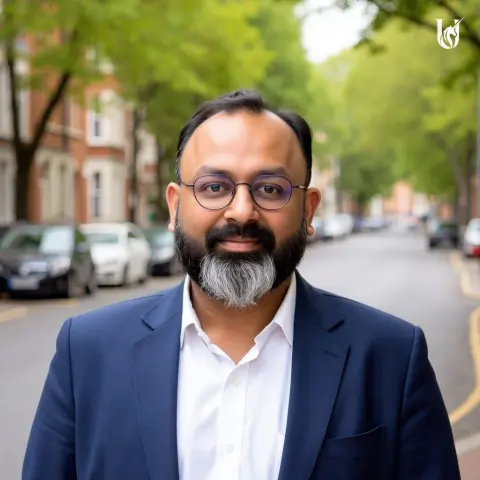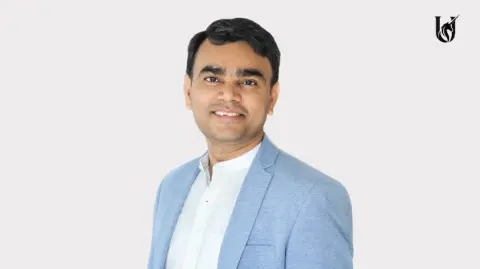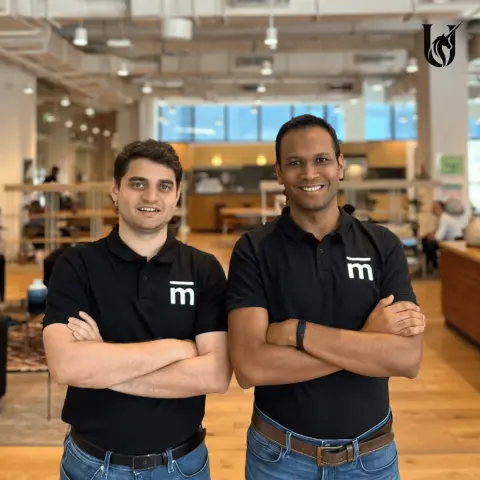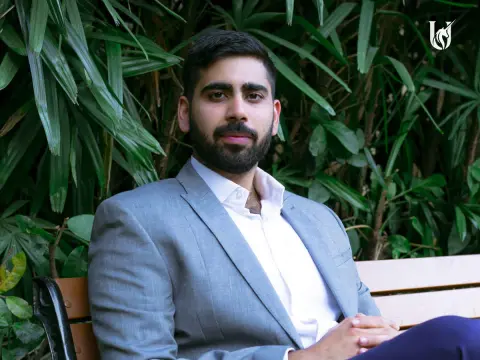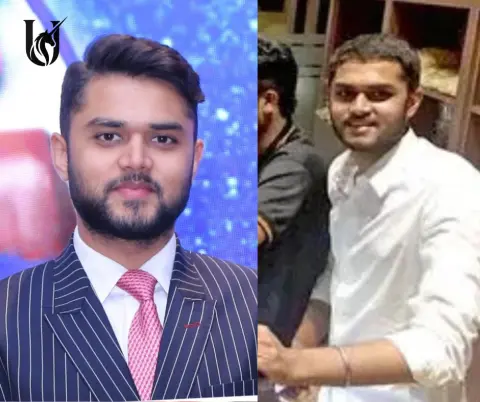

There was a time when Mohit Yadav had a comfortable corporate career, a strong finance background, and every reason to stay on the safe side. He had worked at Deloitte and Credit Suisse and had spent years around numbers, businesses, and big decisions. But somewhere along the way, the desire to build something of his own became stronger than the comfort of a secure career.
Entrepreneurship did not reward him immediately. His early ventures came with setbacks, and one of those failures stayed with him for years. When he later decided to build Minimalist with his brother Rahul Yadav, he was not starting with a perfect success record. He was starting with experience, mistakes and a much clearer understanding of what consumers wanted.
The biggest gamble came when Mohit revealed that he had taken a Rs 1 crore loan against his home to build Minimalist. The risk was deeply personal. He had not just put money into a startup; he had put his family’s security behind his belief in the business.
A few years later, that same company would attract Hindustan Unilever. HUL acquired 90.5% of Uprising Science, the company behind Minimalist, for Rs 2,706.44 Cr, based on a transaction value of around Rs 2,955 Cr. This is the story of how Mohit Yadav turned years of uncertainty into one of India’s most talked-about skincare businesses.
Mohit Yadav: Before Minimalist, There Was a Corporate Career
Before becoming a startup founder, Mohit was deeply rooted in finance. He studied Commerce at the University of Rajasthan and became a Chartered Accountant, securing an All India Rank of 26 and a gold medal. His academic background gave him a strong understanding of numbers, but his career soon took him far beyond traditional accounting.
He began working at Deloitte before moving to Credit Suisse, where he worked as an Assistant Vice President. Those years exposed him to financial strategy, business decisions and the discipline required to understand whether an idea could actually become a sustainable business. But the corporate world did not completely satisfy his entrepreneurial side. Mohit eventually decided to move from analysing businesses to trying to build one himself.
That decision changed the direction of his career.
The First Startup Was a Lesson, Not the Destination
Mohit's first entrepreneurial experiments were far removed from skincare.
He entered the consumer internet space with ventures including Scopial and MangoStreet, working with his brother around fashion and kidswear. The idea had ambition, but the business did not become the success they had hoped for. For many founders, a failed startup can feel like a final answer. For Mohit, it became something else, experience. He learned that having a good idea was not enough. Customers had to want the product, the economics had to work and the business had to be able to survive beyond the excitement of its launch.
Then Came Freewill
Mohit's next major entrepreneurial chapter came in 2018 when he co-founded Freewill, a personalised haircare brand.
The idea was interesting: instead of giving everyone the same product, Freewill tried to use customer information and personalisation to create haircare products suited to individual needs. The company was backed through Sequoia India's Surge programme. Freewill gave Mohit another close look at the beauty industry. He saw how consumers thought about products, how difficult customer acquisition could become and how important it was to create something that people could understand quickly. The experience would later become one of the building blocks for Minimalist.
The Question That Changed Everything
By the time Mohit and Rahul began working on their next idea, the beauty market was already full of brands.
But the brothers noticed something changing. Consumers were no longer blindly buying products because a celebrity recommended them. People were searching for ingredients. They were asking about niacinamide, salicylic acid, vitamin C and retinol. They wanted to understand what they were putting on their skin. The problem was that skincare often felt unnecessarily complicated. There were big promises, attractive packaging and long ingredient lists, but for an ordinary customer, understanding what actually mattered was not always easy.
Mohit and Rahul saw a gap.
Minimalist Was Born From a Simple Idea
In 2020, the brothers launched Minimalist in Jaipur.
The idea was straightforward: remove the unnecessary noise around skincare and focus on ingredients, science and clarity. Minimalist did not try to make skincare sound mysterious. Instead, the brand explained what was inside its products, why those ingredients were being used and what problem they were designed to address. The approach was different from the traditional beauty playbook. The brand wanted customers to understand the product before buying it. And that simple idea became the foundation of the company.
The Risk Was Bigger Than Starting a Company
Starting Minimalist was not simply another business experiment for Mohit. He had already experienced the disappointment of ventures that did not work. This time, he was willing to take a much bigger personal risk.
Mohit later revealed on Shark Tank India that he had raised Rs 1 Cr by mortgaging his home to build the business. He recalled fearing what would happen to his family if the company failed. That moment captures something important about the early Minimalist journey. There was no guarantee that the brand would succeed. No large FMCG company was waiting to acquire it. No established celebrity was putting their face behind it. There was simply a founder who believed the idea could work.
Why Consumers Started Paying Attention
Minimalist entered the market at the right time, but timing alone does not explain its growth. Indian consumers were becoming more informed about skincare, especially younger buyers who were researching ingredients and comparing products online. Minimalist met that consumer with a different voice. Instead of saying, “Buy this because it is beautiful,” the brand tried to say, “Here is what is inside, here is why it is there, and here is how it works.” That approach made the brand feel less like a traditional beauty advertisement and more like a conversation with an informed consumer.
Trust slowly became one of Minimalist's biggest assets.
Building the Brand Without Chasing the Usual Beauty Formula
The founders understood that they could not simply outspend established beauty companies.
So they focused on what they could control: product quality, transparency, education and customer experience. Minimalist built content around ingredients and skin concerns. Its products were designed around specific needs rather than an endless list of vague beauty promises. The brand also kept its communication relatively simple. That clarity helped consumers understand what they were buying, while giving Minimalist a distinct identity in an increasingly crowded skincare market.
From Online Store to a Wider Consumer Brand
Minimalist started as a digital-first business. The internet gave the founders something traditional beauty companies could not easily replicate at the same speed: direct access to customer feedback. Every review, complaint and repeat purchase gave the company information about its consumers. The brand expanded through its own website and online marketplaces such as Amazon and Nykaa, while gradually moving into offline retail. This created a business that was no longer dependent on a single sales channel.
The Numbers Started Telling a Different Story
Minimalist's growth eventually became visible in its financial performance.
In FY24, the company generated around Rs 347 crore in revenue from operations and reported a profit of about Rs 10.83 cr.
The business continued to grow rapidly in the following year. FY25 revenue reached roughly Rs 514 Cr, although the company reported a loss that year due in large part to exceptional accounting items. The important point was that the underlying business was getting much larger. Minimalist had moved beyond being an interesting D2C startup. It had become a serious consumer brand.
The Rs 2,955 Crore Turning Point
Then came the moment that changed the scale of the story.
In January 2025, Hindustan Unilever announced an agreement to acquire a 90.5% stake in Uprising Science, the company behind Minimalist.
The transaction was based on a Rs 2,955 crore pre-money enterprise value. HUL subsequently completed the acquisition on April 21, 2025, paying Rs 2,706.44 Cr for the 90.5% stake.
For Mohit and Rahul, this was a remarkable transition. A company that had started only a few years earlier had now become part of one of India's largest consumer businesses. The founders had gone from worrying about whether their idea would survive to seeing their brand become valuable enough for HUL to make a major acquisition.
Why HUL Wanted Minimalist
HUL was not simply buying bottles, creams and serums.
It was buying a brand that had built a strong connection with consumers interested in active ingredients and science-led skincare. HUL's own annual report describes Minimalist as an actives-led skincare and haircare business built around transparency, scientific and ingredient-led honesty. Its portfolio includes cleansers, serums, moisturisers, sunscreens and haircare products. For HUL, the acquisition added a digital-first, science-led brand to its Beauty & Wellbeing portfolio.
For Minimalist, it opened the door to a much larger manufacturing, distribution and retail ecosystem. The partnership gave the young brand something it could not build overnight on its own: scale.
Minimalist Did Not Stop Growing After the Acquisition
An acquisition can sometimes become the final chapter of a startup story. For Minimalist, it became another beginning. In FY26, Minimalist's revenue from operations reached around Rs 690.2 Cr, up about 36% year on year, while profit after tax stood at approximately Rs 25.9 cr. HUL's FY26 disclosures also showed that Minimalist had crossed an annual revenue run rate of Rs 850 crore. That means the brand was continuing to grow even after becoming part of a much larger organisation.
The startup had become a scaled consumer business without losing the central idea on which it was built.
The Vision Was Bigger Than Skincare
Mohit and Rahul were not simply trying to create another serum brand. Their bigger idea was to change the way consumers understood beauty products. If a customer wanted to know what an ingredient did, the answer should be easy to find. If a product claimed to solve a particular problem, the customer should be able to understand why. That philosophy became part of Minimalist's identity. And it helped the company build something that is difficult to create through advertising alone, a sense that the brand was speaking directly to an informed customer.
Minimalist's Expansion Into Hair and Body Care
The brand did not remain limited to facial skincare. As the business grew, Minimalist expanded into haircare and body care, allowing it to serve more consumer needs without moving too far away from its core philosophy. Its portfolio now includes cleansers, serums, moisturisers, sunscreens and haircare products, according to HUL. The expansion also increased the brand's opportunity to grow beyond a single product category.
But the underlying approach remained the same: targeted products, active ingredients and clear communication.
From Founder to Shark
In 2026, Mohit's journey reached another unexpected milestone.
The entrepreneur who once needed capital for his own startup joined the panel of Shark Tank India Season 5. The move brought his journey full circle. He had experienced the uncertainty of building a company, the pressure of raising money and the pain of seeing early ventures struggle.
Now, he sits across the table from founders asking investors to believe in their ideas. His own journey gives those conversations a very different context.
Mohit Yadav's Net Worth: What Is Known?
Mohit Yadav's exact personal net worth has not been publicly disclosed through a reliable official source.
There are several figures circulating online, but they should be treated as estimates rather than confirmed wealth. What is clear is that the Minimalist transaction created substantial value for its founders and investors. Mohit has also been associated with other investments, including a reported investment in men's wellness company Bold Care. Rather than focusing on an unverified personal wealth figure, the more measurable part of his success is the value created through Minimalist and the business he helped build.
Minimalist: The Numbers Behind the Journey
- 2020: Minimalist founded by Mohit Yadav and Rahul Yadav
- Rs 1 crore: Home-backed loan Mohit has publicly discussed taking to build the business
- Rs 347 crore: FY24 revenue
- Rs 10.83 crore: FY24 reported profit
- Rs 2,955 crore: Pre-money enterprise value in the HUL transaction
- 90.5%: Stake acquired by HUL
- Rs 2,706.44 crore: Consideration paid by HUL for the 90.5% stake
- Rs 690.2 crore: FY26 revenue from operations
- Rs 25.9 crore: FY26 profit after tax
- Rs 850 crore +: Annual revenue run rate reported by HUL for Minimalist in FY26
The Road Ahead Is a Bigger Challenge
Building Minimalist was difficult. Keeping it relevant at a much larger scale may be even harder. India's skincare market is becoming increasingly crowded, with established FMCG companies, international brands and new D2C startups all competing for the same consumer. Minimalist now has the backing and distribution strength of HUL, but it must still protect the thing that made the brand different in the first place. As the company expands, the challenge will be to grow bigger without becoming less clear.
What Mohit Yadav's Story Teaches Entrepreneurs
Mohit's journey offers a lesson that goes beyond skincare.
A failed startup does not necessarily mean a failed entrepreneur. His earlier experiences gave him a better understanding of customers, business models and the cost of getting things wrong. Minimalist also shows the value of solving a clear problem instead of simply entering a popular market. The founders saw consumers becoming more curious about ingredients and built the brand around that curiosity. And perhaps the biggest lesson is that conviction matters, but so does discipline. Mohit took a huge personal risk, yet the business was ultimately built around products, customers, numbers and execution.
From a Mortgaged Home to a Rs 2,955 Crore Brand
There is a reason Mohit Yadav's story connects with people. It does not begin with a billion-dollar idea. It begins with a professional career, a few experiments that did not work, another attempt, and a founder willing to risk his own financial security because he believed he had found a better way to build a beauty brand. Minimalist did not become successful overnight. It grew because Mohit and Rahul understood a simple change in the consumer mindset: people wanted to know what they were buying. They turned that question into a brand.
And the result was a company that went from a risky startup in Jaipur to a business valued at around Rs 2,955 crore, backed by HUL and generating hundreds of crores in annual revenue.
Mohit Yadav's story is therefore not just about building Minimalist. It is about what can happen when failure becomes experience, risk becomes conviction, and a simple idea is given enough time to become a business. Sometimes, the road to the big success story starts with a few chapters that did not work at all.
The Unicorn Magazine