Introduction: Before There Was Tata, There Was a Dream
Long before India became one of the world's fastest-growing economies, before skyscrapers defined Mumbai's skyline, and before the Tata name became synonymous with trust, there was a young entrepreneur who dared to imagine an industrial India when the country had almost none.
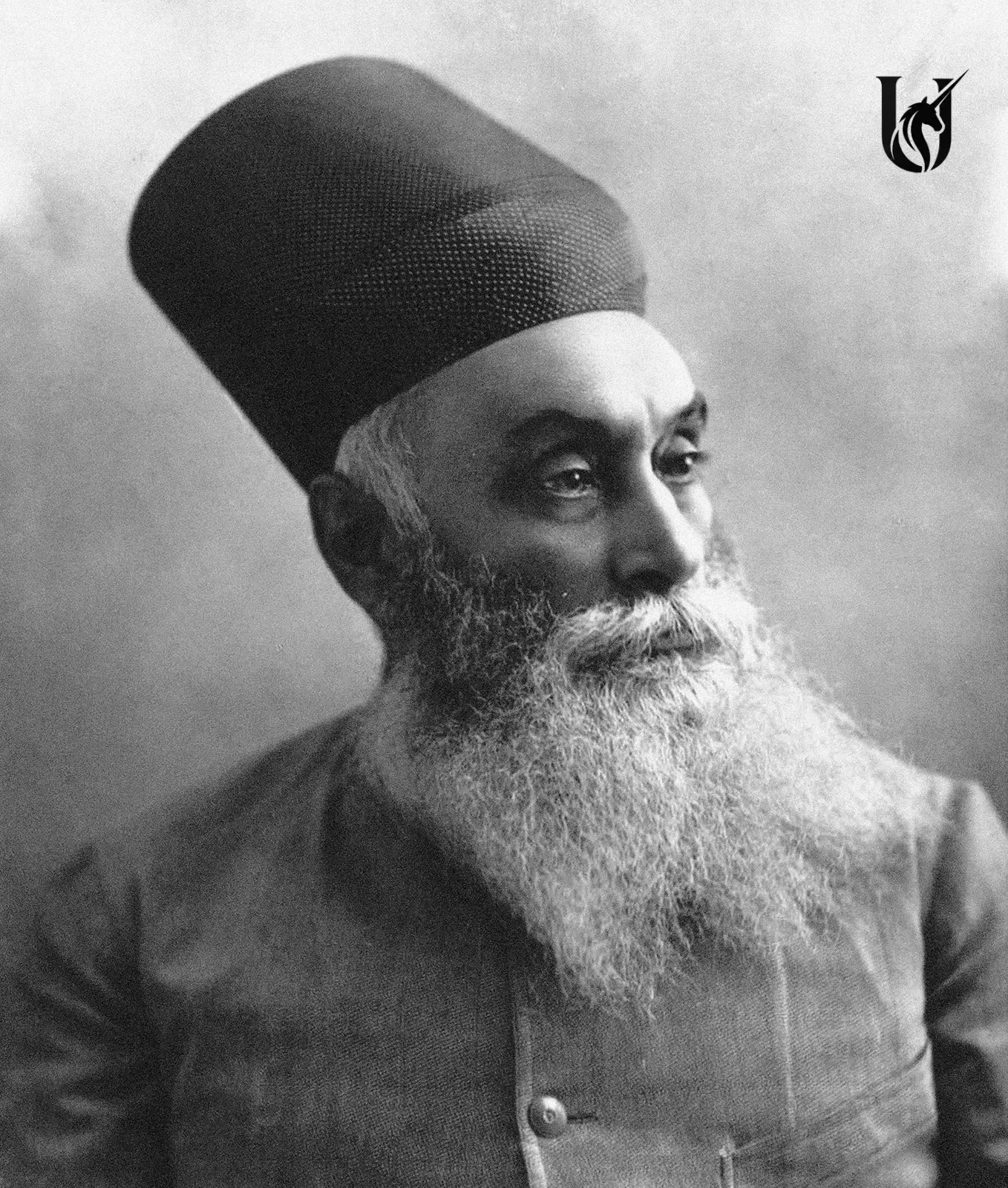
That man was Jamsetji Nusserwanji Tata.
At a time when India was under British colonial rule and largely dependent on foreign industries, Jamsetji believed the country could manufacture its own steel, generate its own electricity, educate world-class scientists, and compete with the most advanced economies on the planet. These ideas sounded impossible in the late 1800s. Yet more than a century later, they form the foundation of modern India.
Jamsetji Tata did not simply establish businesses, he built institutions that would outlive him. His legacy is visible in Tata Steel, Tata Power, the Taj Mahal Palace Hotel, the Indian Institute of Science, and ultimately the Tata Group, one of the world's most respected business conglomerates.
His journey proves that great entrepreneurs don't just build companies, they build nations.
Early Life: A Boy Born Into Tradition, Inspired by Enterprise
Jamsetji Nusserwanji Tata was born on 3 March 1839 in Navsari, Gujarat, into a modest Parsi Zoroastrian family. For generations, the Tata family had served as priests, but his father, Nusserwanji Tata, chose an unconventional path by entering the world of business.
Recognising Bombay's growing importance as a trading hub, Nusserwanji moved there to establish an export business. This decision exposed young Jamsetji to commerce, international trade, and entrepreneurship from an early age.
After moving to Bombay, Jamsetji studied at Elphinstone College, one of India's finest educational institutions. He graduated in 1858 and immediately joined the family business. While many graduates sought stable employment, Jamsetji wanted something far greater, he wanted to understand how global industries worked.
That curiosity would become the defining characteristic of his life.
Learning From the World Before Building for India
Unlike many businessmen of his era, Jamsetji believed the best education came through observation.
His father's business took him across China, Hong Kong, Japan, Europe, the Middle East, and the United States. Every journey became an opportunity to study industries, technology, management practices, and consumer behaviour.
During a visit to China, he closely observed international trade routes and realised how rapidly industrial economies were transforming global commerce.
In England, he toured Lancashire's famous textile mills, studying advanced machinery and manufacturing techniques.
In America, he explored steel plants and mining operations, convinced that India too could become a steel-producing nation.
Germany impressed him with its scientific institutions and industrial research, inspiring his dream of creating a world-class research university in India.
Japan fascinated him most. Watching the country modernise after the Meiji Restoration convinced Jamsetji that India could also transform itself through education, technology, and industrialisation.
Every country he visited added another chapter to his vision for India.
The Entrepreneurial Beginning: Building a Business with Rs 21,000
In 1868, at the age of just 29, Jamsetji founded his own trading company with a capital of Rs 21,000.
Rather than waiting for perfect opportunities, he created them.
One of his earliest business moves reflected his remarkable ability to see value where others saw failure. He purchased a bankrupt oil mill in Bombay, converted it into a cotton textile mill, renamed it Alexandra Mill, improved operations, and later sold it at a profit.
This success provided both capital and confidence.
More importantly, it taught him a lesson that shaped the Tata philosophy for generations:
Businesses don't succeed by buying assets, they succeed by transforming them.
Reinventing India's Textile Industry
During the nineteenth century, India exported raw cotton to Britain and imported expensive finished fabric in return.
Jamsetji believed this economic cycle had to change.
After studying textile manufacturing across England, he realised India possessed all the essential resources to manufacture world-class textiles itself.
Instead of following other industrialists to Bombay, he selected Nagpur for his next venture because it offered cheaper land, easy access to cotton, abundant water, and railway connectivity.
In 1877, he established Empress Mills, which quickly became one of India's finest textile enterprises.
Later came Swadeshi Mills in Bombay and Advance Mills in Ahmedabad.
These mills were remarkable not only for production quality but also for worker welfare. Long before employee benefits became common, Jamsetji introduced clean working conditions, accident compensation, pensions, and healthcare support.
For him, industrial growth and human welfare were inseparable.
The Dream That Built Tata Steel
Among all his ambitions, none seemed more impossible than building an Indian steel industry.
British officials dismissed the idea, believing Indians lacked the expertise to manufacture quality steel.
Jamsetji refused to accept those assumptions.
He travelled extensively across the United States, meeting engineers, geologists, and metallurgists. He commissioned geological surveys throughout India and searched relentlessly for iron ore and coal deposits.
The journey was filled with scepticism.
One British railway official reportedly mocked the proposal, claiming he would "eat every pound of steel" the Tatas ever produced.
Jamsetji never responded publicly.
Instead, he continued working.
Although he passed away before seeing the dream realised, his vision became reality when Tata Iron and Steel Company (TISCO) was established in 1907 by his son Sir Dorabji Tata.
Today, Tata Steel ranks among the world's leading steel producers, a living monument to Jamsetji's determination.
Powering India's Future
Industrialisation required affordable electricity.
During his travels, Jamsetji recognised that Mumbai's textile mills relied heavily on coal-fired boilers, creating pollution and limiting growth.
He envisioned harnessing the rivers of the Western Ghats to generate hydroelectric power.
His plan eventually became the foundation of Tata Power, one of India's earliest hydroelectric initiatives.
Although he did not live long enough to witness its completion, his successors transformed the vision into reality, providing cleaner and more reliable energy to Mumbai.
Building India's Most Iconic Hotel
One of the most enduring stories surrounding Jamsetji Tata involves hospitality.
Inspired by the world's finest hotels during his travels, he wanted India to have a luxury hotel that matched global standards.
The result was the Taj Mahal Palace Hotel, inaugurated in 1903.
Far ahead of its time, the hotel introduced electric lighting, elevators, imported furnishings, Turkish baths, and world-class hospitality.
It quickly became a symbol of Indian excellence and remains one of the country's most iconic landmarks.
For Jamsetji, the Taj Hotel represented far more than luxury, it was proof that India could create institutions equal to the best anywhere in the world.
Education: Investing in India's Future Minds
Jamsetji understood that industries alone could not build a nation.
India also needed scientists, researchers, and innovators.
Inspired by Germany's scientific ecosystem, he proposed establishing a research university that would rival the world's best institutions.
His vision eventually became the Indian Institute of Science (IISc) in Bengaluru, today recognised as India's premier scientific research institution.
He also introduced scholarships that enabled Indian students to pursue higher education abroad, believing exposure to global knowledge would accelerate national development.
Challenges That Tested His Vision
Jamsetji's journey was anything but easy.
He faced colonial policies that favoured British industries, resistance from government officials, limited access to capital, technological constraints, and widespread scepticism about India's industrial capabilities.
Many of his ideas were dismissed as unrealistic.
Several ambitious projects remained unfinished during his lifetime.
Yet he never allowed temporary setbacks to weaken his long-term vision.
His greatest strength was patience.
He measured success not in years, but in generations.
The Birth of the Tata Group
What began as a small trading company in 1868 gradually evolved into one of the world's most respected business houses.
Today, the Tata Group operates in more than 100 countries, serving customers across six continents through companies spanning steel, automobiles, information technology, aviation, consumer products, retail, renewable energy, hospitality, healthcare, telecommunications, and financial services.
The values established by Jamsetji, integrity, innovation, excellence, and nation-building, continue to guide the group over 150 years later.
Achievements That Changed India
Jamsetji Tata's contributions extended far beyond business.
He founded India's modern textile industry, envisioned the country's first integrated steel plant, pioneered hydroelectric power generation, built one of Asia's finest luxury hotels, initiated scientific research through IISc, and created scholarship programmes that empowered generations of Indian students.
Few entrepreneurs have influenced a nation's industrial, educational, and scientific landscape as profoundly.
Jamsetji Tata's Legacy and the Tata Group Today
More than a century after his passing, Jamsetji Tata's vision continues to shape India's economic future.
The Tata Group has grown into one of the world's largest and most respected conglomerates, generating annual revenues exceeding US$165 billion (FY2024-25) through over 30 publicly listed companies with a combined market capitalisation of well over US$400 billion. The Tata family itself does not feature among India's richest individuals because much of the wealth created by the group is held by philanthropic Tata Trusts, which support education, healthcare, scientific research, rural development, and social welfare.
This unique ownership structure reflects Jamsetji's original belief that business exists to serve society, not the other way around.
Business Lessons Every Entrepreneur Can Learn
Jamsetji Tata's story offers timeless lessons for founders and business leaders:
- Dream beyond your lifetime and build institutions, not just companies.
- Learn globally but solve local problems.
- Invest in people as much as profits.
- Stay patient when pursuing transformational ideas.
- Build businesses that create value for society.
- Let integrity become your greatest competitive advantage.
- Never stop learning, no matter how successful you become.
Conclusion: The Man Who Built More Than a Business Empire
Jamsetji Nusserwanji Tata never called himself a visionary.
He simply believed India deserved the very best.
From a Rs 21,000 trading venture to the foundations of one of the world's most admired business groups, his journey is not merely a founder's story, it is the story of modern India's industrial awakening.
Many of the enterprises he imagined were completed only after his death, proving that truly transformative leaders do not work only for their own generation. They build for generations yet to come.
More than 120 years later, every Tata company, every steel plant, every power station, every hotel, every scientist graduating from IISc, and every entrepreneur inspired by ethical leadership carries a small part of Jamsetji Tata's dream forward.
His greatest achievement was never building an empire.
It was giving India the confidence to build one of its own.