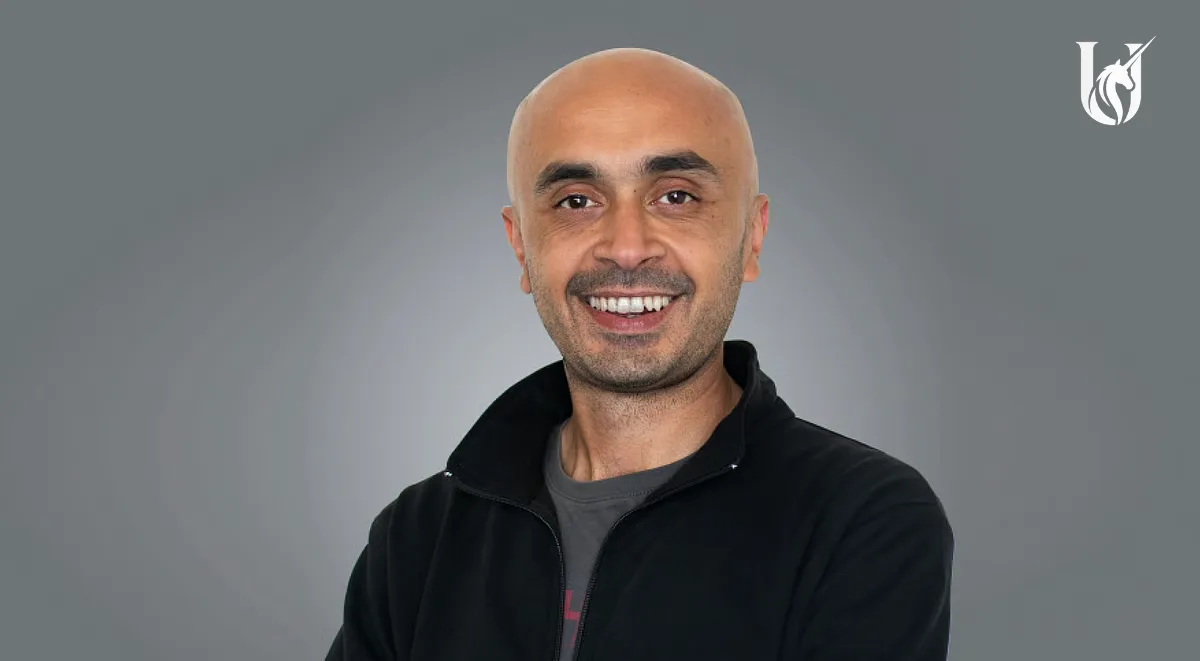
India's startup ecosystem is filled with founders who chase bold ideas. Few, however, have experienced the kind of highs, setbacks, pivots, and comebacks that define Albinder Dhindsa's entrepreneurial journey. From leaving a comfortable career in the United States to building Grofers, transforming it into Blinkit, selling the company to Zomato, and eventually becoming the Group CEO of Eternal Limited, Dhindsa's story is one of relentless execution rather than overnight success.
His journey proves that building a great company is rarely about having the perfect idea from day one, it's about constantly adapting until you find the model that works.
Early Life and Education
Born in Patiala, Punjab, Albinder Dhindsa always had a strong academic foundation. He completed his Bachelor of Technology from IIT Delhi, one of India's most prestigious engineering institutes, before pursuing an MBA from Columbia Business School in New York.
Like many ambitious Indian graduates, Dhindsa began what many would describe as the "American Dream." He worked with companies including URS Corporation, Cambridge Systematics, and later UBS Investment Bank, gaining valuable experience in transportation, analytics, and finance.
On paper, everything looked perfect. But deep inside, he wanted to build something of his own.
Returning to India to Join a Young Startup
In 2011, Dhindsa returned to India at a time when the country's internet economy was just beginning to take shape.
Instead of joining an established multinational company, he made an unconventional decision—joining Zomato, which had only recently rebranded from Foodiebay.
As Head of International Operations, Dhindsa played an important role in expanding the food discovery platform beyond India into global markets. Working closely with founder Deepinder Goyal, he gained first-hand exposure to scaling a technology startup at high speed.
The experience would eventually inspire him to launch a venture of his own.
The Birth of Grofers
While working at Zomato, Dhindsa met Saurabh Kumar, who was experimenting with a logistics startup called Onenumber.
The duo realised that neighbourhood stores struggled with last-mile deliveries. Instead of building another marketplace, they decided to solve a much larger operational problem.
In 2013, they founded Grofers.
Initially, Grofers wasn't a grocery company.
The startup simply connected consumers with nearby stores while handling deliveries.
The idea addressed a massive gap in India's fragmented retail ecosystem.
Dhindsa soon left Zomato to build Grofers full-time.
Starting Small
The company's early operations were remarkably modest.
By early 2014, Grofers was operating in Gurugram with just four delivery executives.
Resources were limited.
Every delivery mattered.
Every customer review influenced future growth.
Within little over a year, the company expanded to nearly 200 delivery partners while building technology, operations, customer service, and supply-chain capabilities from scratch.
It became clear that convenience could become a large business in India.
Rapid Growth and Investor Confidence
As online grocery adoption increased, investors began taking notice.
Over the next few years, Grofers raised more than $700 million from leading global investors including:
- SoftBank
- Tiger Global
- Sequoia Capital
- Various international venture funds
The funding allowed the company to expand across multiple Indian cities and strengthen its logistics infrastructure.
By 2019, Grofers was targeting a gross merchandise value (GMV) of over Rs 5,000 crore, positioning itself among India's largest online grocery platforms.
But success came with an equally big problem.
Competition intensified rapidly.
The Biggest Pivot: Becoming Blinkit
By 2020, consumer expectations had changed dramatically.
Customers no longer wanted same-day grocery deliveries.
They wanted deliveries within minutes.
Many founders would have continued protecting their existing business model.
Dhindsa chose the harder path.
In 2021, Grofers completely reinvented itself.
The company rebranded as Blinkit and shifted its entire strategy towards 10-minute quick commerce.
It wasn't merely a name change.
It required rebuilding warehouses, redesigning logistics, creating dark stores, improving inventory systems, and optimising thousands of operational decisions every single day.
The pivot transformed Blinkit into one of India's most recognised quick-commerce brands.
Acquisition by Zomato
The transformation attracted the attention of Dhindsa's former employer.
After initially investing $100 million for a minority stake, Zomato acquired Blinkit in 2022 in a deal valued at approximately $568 million (Rs 4,447 crore).
Many observers questioned the acquisition.
Some believed Zomato had overpaid.
Others doubted whether quick commerce could ever become profitable.
Dhindsa now had another challenge: proving everyone wrong.
Turning Blinkit Around
The post-acquisition period was far from smooth.
Blinkit faced mounting pressure to reduce losses while expanding rapidly.
Reports suggested Dhindsa even faced calls to step aside during difficult phases.
Instead of walking away, he focused on execution.
Under his leadership:
- Blinkit expanded from around 383 dark stores to over 1,800 stores.
- The platform diversified beyond groceries into electronics, beauty, home essentials, fashion, medicines, and even ambulance services.
- Operational efficiency improved significantly.
- The business moved steadily towards profitability.
By late 2025, Blinkit reportedly held an estimated 45-50% share of India's quick-commerce market, competing against players like Swiggy Instamart and Zepto.
What once looked like Zomato's riskiest acquisition gradually became its fastest-growing business.
From Founder to Group CEO of Eternal
In one of the biggest leadership transitions in India's startup ecosystem, Deepinder Goyal stepped aside as Group CEO of Eternal Limited, the parent company of Zomato, Blinkit, Hyperpure, and other businesses.
He entrusted operational leadership to Albinder Dhindsa.
The appointment reflected years of trust built through performance rather than titles.
Goyal publicly described Dhindsa as a battle-hardened founder whose operational abilities exceeded his own.
As Group CEO, Dhindsa now oversees execution across Eternal's growing business portfolio while Goyal focuses on long-term strategy as Vice Chairman.
The move symbolised a new chapter, not just for Dhindsa, but for one of India's most influential consumer internet companies.
Becoming an Author
Beyond entrepreneurship, Dhindsa is also documenting his journey.
His upcoming book, BuildIt, explores the realities of building startups—from difficult pivots and regulatory hurdles to fundraising, operational crises, and the Blinkit acquisition.
Rather than presenting entrepreneurship as glamorous, the book focuses on the decisions, failures, and resilience required to build enduring companies.
Blinkit Today
Today, Blinkit has evolved far beyond an online grocery platform.
Its network of thousands of dark stores enables deliveries across multiple categories within minutes.
The company continues expanding its infrastructure while strengthening its position in India's fast-growing quick-commerce market.
Backed by Eternal, Blinkit has become one of the country's most strategically important technology businesses and remains a major contributor to the group's future growth.
Net Worth and Business Value
Although Albinder Dhindsa's personal net worth has not been officially disclosed, the businesses he has built have created enormous enterprise value.
Some notable milestones include:
- Over $700 million raised during Grofers' growth journey.
- $568 million acquisition by Zomato in 2022.
- Blinkit's emergence as India's leading quick-commerce platform with an estimated 45-50% market share by late 2025.
- Leadership of Eternal Limited, one of India's largest consumer internet companies.
Challenges That Defined His Journey
Dhindsa's success wasn't built on uninterrupted growth.
He navigated:
- Fierce competition in online grocery.
- Multiple business model pivots.
- Investor pressure.
- Questions surrounding Blinkit's acquisition.
- Regulatory scrutiny around ultra-fast deliveries.
- Operational complexity at massive scale.
Each challenge strengthened the business rather than weakening it.
Lessons from Albinder Dhindsa's Journey
Albinder Dhindsa's entrepreneurial story offers valuable lessons for founders and business leaders alike:
- A great idea is only the beginning; execution creates lasting businesses.
- Successful founders are willing to abandon old strategies when markets change.
- Operational excellence can become a company's biggest competitive advantage.
- Long-term resilience matters more than short-term headlines.
- Leadership is earned through results, not position.
Conclusion
Albinder Dhindsa's journey, from an IIT graduate pursuing the American dream to building Grofers, reinventing it as Blinkit, leading its successful acquisition by Zomato, and ultimately becoming the Group CEO of Eternal, is one of the most compelling founder stories in India's startup landscape.
His success wasn't built on perfect timing or easy wins. It came from making difficult decisions, embracing change, and executing relentlessly when the odds were against him.
As India's quick-commerce industry continues to evolve, Dhindsa's story stands as a reminder that the most enduring companies are built by founders who are willing to rethink, rebuild, and keep moving forward, no matter how challenging the journey becomes.