
API Holdings, the parent company of PharmEasy and backed by global private equity firm TPG, is preparing for a possible return to the public markets after becoming debt-free.
However, the company is clear that profitability will come before any IPO decision. API Holdings has recently repaid its outstanding term debt of Rs 1,050 Cr using money from a partial stake sale in Thyrocare and internal accruals. It still holds a controlling 51.02% stake in the listed diagnostics company.
Key Numbers
- Rs 1,050 crore - Term debt repaid by API Holdings
- 51.02% - Stake retained in Thyrocare
- Rs 168 crore - EBITDA loss excluding Thyrocare in FY26, down from Rs 637 Cr in FY24
Profitability Before IPO
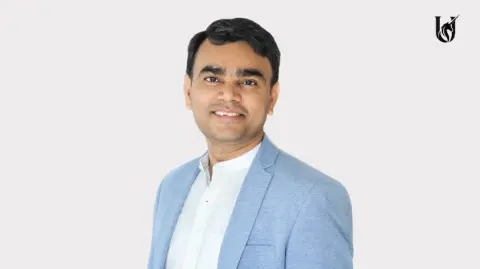
Rahul Guha, Managing Director and CEO of API Holdings, said the company is now targeting profitability in its business excluding Thyrocare by September 2027.
At the consolidated level, including Thyrocare, API Holdings has already become profitable.
Guha said the company became debt-free earlier than expected and is also making steady progress towards profitability.
API Holdings counts major investors including TPG, Prosus Ventures, Temasek, Manipal Education and Medical Group (MEMG), CDPQ, LGT Lightrock, Eight Roads and Think Investments.
According to Guha, all major operating businesses, including PharmEasy, Ascent and Aknamed, are already EBITDA positive before central costs are included. The remaining pressure mainly comes from corporate expenses such as technology, finance, HR, legal and professional costs.
IPO or Thyrocare Merger?
API Holdings is keeping both an independent IPO and a possible merger with Thyrocare on the table.
But Guha said the company will decide only after reaching its profitability target. He also does not want to rush into an IPO simply because market conditions are favourable.
The focus right now is to build a profitable business first and then decide the best route for the company.
This marks a major change from API Holdings’ earlier strategy, when it expanded rapidly through acquisitions and raised significant external capital.
Losses Have Fallen Sharply
The company's financial performance has improved significantly over the past few years.
Excluding Thyrocare, API Holdings’ EBITDA loss fell from Rs 637 Cr in FY24 to Rs 396 Cr in FY25 and Rs 168 Cr in FY26.
The company expects the loss to reduce further this year and reach break-even by Q2FY28.
At the same time, operating expenses have come down from Rs 1,225 crore in FY24 to Rs 1,029 Cr in FY25 and Rs 943 Cr in FY26.
The turnaround has been supported by lower costs, better gross margins and closer integration across the group.
PharmEasy now sources almost all its products through the group’s own distribution network. Shared warehousing, procurement and finance operations are also helping the company reduce costs.
No Immediate Fundraising Plans
API Holdings does not currently plan to raise fresh equity capital.
The company has not raised equity since 2021, and Guha said another major dilution is not the preferred route after the large fundraises of earlier years.
Instead, API Holdings plans to grow revenue by around 15% annually, using internal cash generation and bank-funded working capital.
A larger fundraise could come later if the company decides to pursue an IPO or a Thyrocare merger.
PharmEasy Wants to Be More Than an Online Pharmacy
The healthcare market has changed significantly since the pandemic. Online pharmacies such as PharmEasy, Tata 1mg, Apollo 24|7 and Netmeds are now competing across a much wider healthcare space.
The focus is no longer limited to medicine delivery. Platforms are increasingly adding diagnostics, doctor consultations and other outpatient healthcare services.
PharmEasy is also moving in this direction. API Holdings wants to build PharmEasy as an integrated outpatient healthcare platform, rather than simply an online medicine-delivery company.
Higher-margin products and services already contribute around 25% of PharmEasy’s revenue, while generics and private-label products account for around 9%.
As Guha puts it, PharmEasy is no longer just a medicine delivery platform but an OPD healthcare platform.
If the core business becomes cash-flow positive, the company expects its asset-light model to create stronger operating leverage as revenue grows.
For now, the message from API Holdings is simple: get profitable first, then decide whether the next big step is an IPO or a Thyrocare merger.





/indianstartupnews/media/media_files/2026/08/04/nitish-mittersain-hands-over-nazara-ceo-role-to-raymond-stauffer-2026-08-04-23-21-50.jpeg)