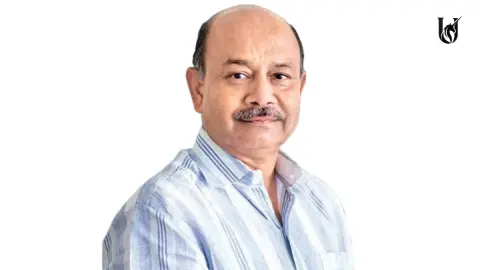
The Man Who Never Chased Fame
Rahul Bhatia is one of those entrepreneurs who built something huge without trying to become famous. His name may not be as visible as the brand he helped create, but his fingerprints are all over IndiGo. Through InterGlobe Enterprises, Bhatia helped build an airline around a simple idea: flying should be affordable, reliable, and predictable. That simple thinking eventually turned IndiGo into India’s largest airline by passengers carried and fleet size.
His story is less about glamour and more about discipline, patience, and getting the basics right.
Early Life and Education
Rahul Bhatia was born in 1960 and grew up in Delhi in a business family. His family had roots in Rawalpindi before eventually settling in India. After completing school, he moved to Canada and studied engineering at the University of Waterloo. Engineering was not really his passion, but the experience gave him a strong foundation in technology and problem-solving.
During his college years, he also worked with IBM, gaining early exposure to large-scale business and technology.
The First Step Into Business
After completing his studies, Bhatia briefly worked with United Airlines’ information technology division. It was there that he met Rakesh Gangwal, a relationship that would become extremely important years later. Back in India, Bhatia joined his father Kapil Bhatia’s business and began looking for new opportunities.
In 1989, Rahul and his father founded InterGlobe Enterprises. What started as a travel-related business would eventually grow into a much larger group with interests across aviation, hospitality, technology, and logistics.
The Idea That Became IndiGo
Rahul Bhatia had been interested in aviation for years, but he knew that building an airline required someone with deep industry knowledge. That person was Rakesh Gangwal, his former colleague from United Airlines. Together, they saw an opportunity in India’s growing demand for affordable air travel. Their vision was straightforward: build an airline that passengers could trust without making flying unnecessarily expensive.
That idea became IndiGo, launched through InterGlobe Aviation in 2006.
Building an Airline Around Simplicity
Bhatia did not try to make IndiGo complicated. Instead, he focused on doing a few important things extremely well. The airline concentrated on affordable fares, clean aircraft, quick turnarounds, and strong on-time performance. A largely standardized Airbus fleet helped simplify maintenance, crew training, and operations.
The goal was not to offer everything, but to make the basic flying experience dependable every single time.
The Bold 100-Aircraft Bet
One of Bhatia’s biggest early decisions came before IndiGo had even started flying. In 2005, the company placed an order for 100 Airbus A320 aircraft. For a new airline, it was a massive commitment and a clear signal that Bhatia was thinking far beyond the first few flights.
The order gave IndiGo a foundation for rapid expansion as India’s aviation market grew.
It was a bold bet on the future of Indian air travel, and one that eventually changed the airline industry.
IndiGo’s First Flight
IndiGo officially began operations on 4 August 2006, with its first flight operating between Delhi and Imphal via Guwahati. At the time, the airline was a new name in a market already filled with established players. But IndiGo slowly built a reputation for being predictable, affordable, and operationally disciplined.
Instead of trying to become the most luxurious airline, it focused on becoming one passengers could rely on.
The Business Model That Changed Indian Aviation
IndiGo’s success came from making efficiency a competitive advantage. The airline kept its operations simple and worked to keep aircraft flying for as much of the day as possible.
Its sale-and-leaseback approach also helped the company manage capital more efficiently than simply owning every aircraft. The standardized fleet reduced complexity across training and maintenance.
Over time, these small operational advantages became a powerful business model.
From One Aircraft to Hundreds
IndiGo’s growth accelerated as more Indians began travelling by air. The airline steadily added aircraft and routes, connecting major cities with smaller and emerging destinations.
What started with a single aircraft eventually grew into a fleet of hundreds. The airline also expanded internationally while continuing to strengthen its domestic network.
Its focus on frequency, affordability, and operational efficiency helped it become the dominant player in India’s aviation market.
The IPO That Changed Bhatia’s Wealth
In October 2015, InterGlobe Aviation, the company behind IndiGo, went public. The listing brought greater visibility to the airline and significantly increased the value of the promoters’ holdings. For Rahul Bhatia, the IPO marked another major milestone in a journey that had started decades earlier with InterGlobe Enterprises. IndiGo had moved from being a young airline to one of India’s most valuable aviation businesses.
The market was now recognising the scale of what Bhatia and his team had built.
Building Beyond IndiGo
Aviation remains the biggest success story, but Rahul Bhatia’s business interests extend beyond airlines. Through InterGlobe, the group has built businesses across travel distribution, hospitality, technology, and logistics. InterGlobe Hotels operates hotels in India in partnership with Accor, while its logistics venture Movin works with UPS. This diversification reflects Bhatia’s broader approach of building businesses around India’s growing travel and consumer economy.
The Challenges Along the Way
Building an airline in India has never been easy. Fuel prices, currency movements, intense competition, supply-chain issues, and aircraft-related problems have all tested the industry.
IndiGo has also faced periods of operational disruption and pressure from changing aviation regulations. Yet the company’s ability to maintain its core operating model helped it navigate difficult periods.
For Bhatia, the lesson has repeatedly been that strong systems matter most when the business is under pressure.
The Crisis That Tested IndiGo
IndiGo faced a major operational crisis in December 2025, when large-scale flight disruptions and cancellations affected passengers across India. The episode put the airline’s operations and leadership under intense public scrutiny.
It also showed how quickly a highly efficient system can come under pressure when several factors collide at once. For a company built around reliability, restoring passenger confidence became especially important.
A Leader Close to the Operations
Rahul Bhatia has generally stayed away from the spotlight, preferring business execution over personal publicity. People who have worked with him often describe him as detail-oriented and focused on long-term results. Even after IndiGo became one of the world’s major airlines, he continued to pay close attention to operations and costs.
That hands-on approach has been one of the defining characteristics of his leadership.
India’s Aviation Giant Today
IndiGo has grown far beyond the small airline launched in 2006. By the mid-2020s, it had captured roughly two-thirds of India’s domestic aviation market.
The airline operates more than 2,200 flights a day, with a fleet approaching 400 Airbus aircraft and a network covering 100+ destinations. Its scale has made it one of the most important airlines in India and one of the fastest-growing carriers globally. The journey shows how powerful a simple business model can become when executed consistently.
Rahul Bhatia’s Net Worth & IndiGo’s Valuation
Rahul Bhatia’s estimated net worth is around $6.5 Bn - $7.1 Bn, or approximately Rs 54,000 cr- Rs 60,000 Cr, based on available estimates and market-linked holdings.
His wealth is closely connected to his stake and interests in the InterGlobe group and its businesses. InterGlobe Aviation, the company behind IndiGo, has a market capitalization of approximately Rs 1.93 lakh cr, equivalent to roughly $21-23 Bn.
These figures can change with market prices, but they reflect the enormous scale of the business Bhatia helped build.
Awards and Recognition
Rahul Bhatia’s work has received recognition from several leading business institutions.
He has been named Entrepreneur of the Year by organisations including Ernst & Young and The Economic Times. He has also received recognition through the Forbes India Leadership Awards and appeared on Forbes’ Global Game Changers list. Yet despite these achievements, Bhatia has largely remained focused on building businesses rather than building a public image.
The Future Beyond Aviation
As IndiGo enters its third decade, the company is entering a new phase of growth. International expansion, a larger fleet, new aircraft orders, and changing passenger expectations will shape its next chapter. At the same time, Bhatia continues to explore opportunities beyond aviation, including emerging areas such as technology and artificial intelligence. The next challenge will be maintaining the discipline that made IndiGo successful while managing the complexity that comes with global scale.
For Bhatia, the journey is clearly not finished.
Key Lessons From Rahul Bhatia
Rahul Bhatia’s journey offers a simple lesson: you do not always need a complicated idea to build a massive company. IndiGo succeeded by focusing on affordability, consistency, efficiency, and operational discipline.
His story also shows the value of patience, building a trusted brand takes years of doing the basics right. Most importantly, Bhatia proved that staying close to operations can matter just as much as having a big vision.
The Legacy of Rahul Bhatia
Rahul Bhatia did not set out to become the face of Indian aviation. He focused on building a business that worked, one system at a time. From a travel company started in 1989 to an airline with hundreds of aircraft, the journey has been remarkable. IndiGo changed how millions of Indians think about air travel by making flying more accessible and predictable. And behind that blue-and-white aircraft is a founder whose greatest strength may have been keeping things simple.