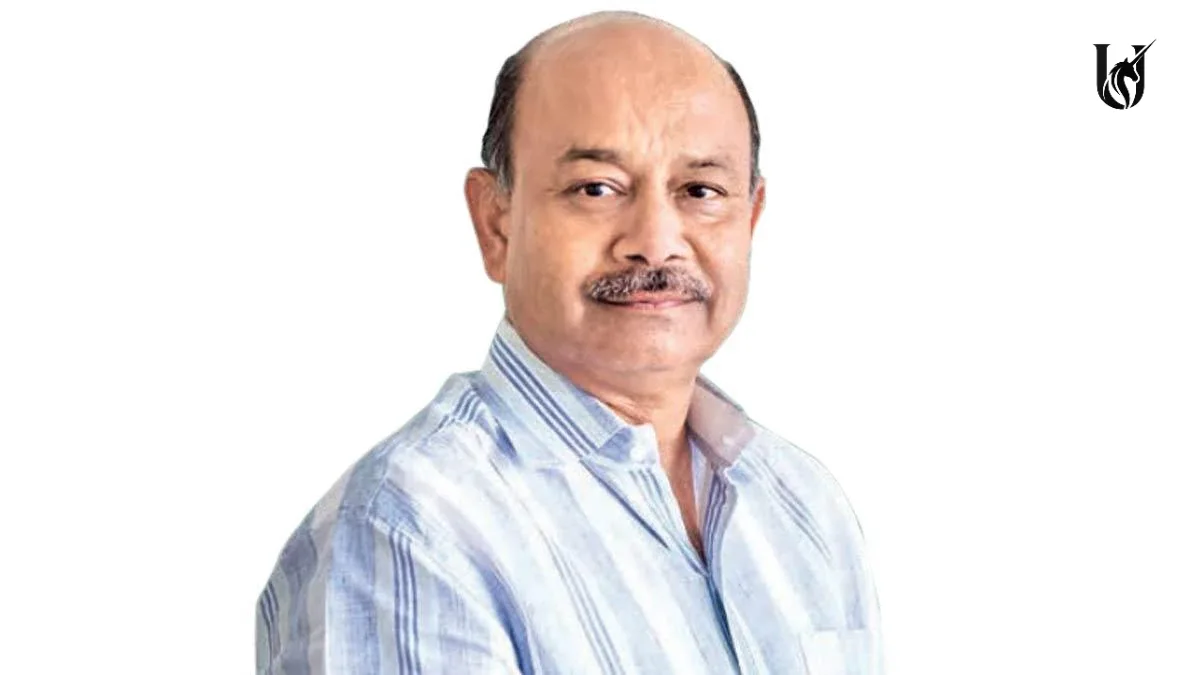
Every successful entrepreneur has a unique journey, but very few build an empire without chasing headlines. Radhakishan Damani is one of those rare business leaders. He never became a celebrity entrepreneur, never relied on aggressive marketing, and rarely appeared in public. Yet, through patience, discipline, and an extraordinary understanding of Indian consumers, he built D-Mart into one of India's most profitable retail chains.
From leaving college midway and learning the stock market from scratch to creating a retail business worth over Rs 3 lakh crore, Damani's story proves that lasting success isn't built through speed, it's built through consistency. His journey is an inspiration for entrepreneurs who believe in creating long-term value instead of short-term hype.
Founder's Vision: Building Trust Instead of Chasing Growth
Unlike many entrepreneurs who dream of building the biggest company overnight, Radhakishan Damani believed in creating the most trusted one. His vision was simple yet powerful: provide quality products at the lowest possible prices every single day.
He understood something many retailers overlooked: Indian families don't visit supermarkets for luxury; they visit to save money on everyday essentials. Instead of spending heavily on advertisements or expensive store designs, Damani invested in operational efficiency, supply chains, and customer satisfaction. His philosophy was straightforward: if customers save money every time they visit, they will always return. This customer-first mindset became the strongest pillar behind D-Mart's extraordinary success.
Company Background: From Stock Market Success to Retail Revolution
Before becoming a retail icon, Radhakishan Damani had already earned immense respect on Dalal Street.
Born in 1954 into a middle-class Marwari family in Mumbai, Damani was introduced to the stock market through his father, who worked as a stockbroker. Although he enrolled in commerce at the University of Mumbai, he left college after his first year when his father passed away, forcing him to shoulder family responsibilities.
The stock market became his classroom.
Throughout the 1980s and 1990s, Damani built a reputation as one of India's smartest value investors. While many traders chased speculative profits, he focused on understanding businesses deeply and investing patiently. His disciplined investing style helped him create significant wealth long before D-Mart was born. However, despite his success in investing, Damani wanted to build something tangible, something that would directly improve the lives of millions of Indian consumers. That dream laid the foundation for Avenue Supermarts, the parent company of D-Mart.
In 2002, the first D-Mart store opened in Powai, Mumbai. It wasn't flashy or luxurious, but customers immediately noticed something different: fair pricing, quality products, and an enjoyable shopping experience.
Early Challenges: Winning Customers in a Highly Competitive Market
Launching D-Mart wasn't easy.
At the time, India's organized retail industry was becoming increasingly competitive. Large retail chains were opening stores rapidly, spending enormous amounts on advertising, leasing expensive commercial spaces, and expanding aggressively across cities.
Damani chose the opposite path. Instead of renting premium properties, he purchased store locations wherever possible. While this required higher upfront investment, it protected the business from rising rental costs for decades.
Many industry experts believed his slow expansion strategy would fail. Some questioned whether customers would remain loyal without massive promotional campaigns. Others believed supermarkets offering everyday low prices couldn't generate sustainable profits.
Damani ignored the noise. Rather than opening hundreds of stores quickly, he focused on perfecting each store's profitability. Every process, from inventory management to supplier negotiations, was optimized before moving to the next location.
This patient approach became D-Mart's greatest competitive advantage.
The Business Model That Changed Indian Retail
D-Mart didn't become India's favorite supermarket because it offered the widest variety of products. It became successful because it consistently delivered value.
Damani introduced a retail model based on operational discipline instead of marketing.
The company purchased products directly from manufacturers, reducing intermediary costs. It maintained limited but fast-moving inventory, ensuring products sold quickly instead of sitting on shelves. Most importantly, D-Mart owned a large portion of its retail properties, significantly reducing long-term operating expenses.
Instead of offering temporary festival discounts, D-Mart adopted an "Everyday Low Price" strategy. Customers knew they didn't have to wait for sales because prices remained affordable throughout the year.
This transparency built enormous trust among middle-class families, turning millions of first-time shoppers into loyal customers.
Growth: From One Store to India's Retail Powerhouse
D-Mart's expansion wasn't explosive; it was remarkably disciplined.
For almost a decade, the company expanded cautiously, opening stores only after ensuring previous locations were consistently profitable. Unlike competitors chasing rapid market share, Damani focused on creating financially strong stores that could sustain long-term growth.
As India's middle class expanded and organized retail gained momentum, D-Mart's business model proved highly scalable.
Year after year, customer footfall increased, revenues climbed steadily, and profitability remained among the highest in the industry.
Even during periods when several retail chains struggled with mounting debt and operational losses, D-Mart continued generating healthy profits because its foundation had been built carefully from the beginning.
Its ability to combine affordability, operational efficiency, and customer trust transformed the company into one of India's strongest retail brands.
Expansion: Scaling Without Losing Efficiency
After establishing a solid presence in western India, D-Mart gradually expanded across multiple states.
Rather than entering every city simultaneously, the company adopted a cluster-based expansion strategy. Stores were opened in nearby regions, allowing supply chains, warehouses, and logistics networks to operate more efficiently.
This reduced transportation costs, improved inventory management, and maintained product availability across locations.
The company also entered e-commerce through D-Mart Ready, offering online grocery services in selected cities while maintaining its focus on profitability instead of aggressive expansion.
Today, D-Mart operates more than 500 stores across India and continues expanding carefully, ensuring each new location strengthens the business rather than stretching resources.
Achievements: Redefining Organized Retail in India
Over two decades, D-Mart has become one of India's most admired business success stories.
The company transformed grocery shopping for millions of Indian households by making quality products affordable without compromising on customer experience.
Its 2017 IPO became one of the most successful public listings in Indian stock market history, with shares delivering exceptional returns and instantly creating enormous wealth for investors.
More importantly, D-Mart achieved something very few retail businesses globally have managed: it remained consistently profitable while expanding rapidly.
The company has also become a benchmark for operational excellence, inspiring entrepreneurs across sectors to prioritize sustainable growth over reckless expansion.
Valuation and Radhakishan Damani's Net Worth
Today, Avenue Supermarts commands a market capitalization of around Rs 3.09 lakh Cr, making it one of India's most valuable retail companies.
Radhakishan Damani remains among India's richest entrepreneurs, with an estimated net worth of approximately $15-17 billion (over Rs 1.3 lakh Cr) depending on market valuations.
Unlike many billionaires, however, Damani continues to maintain an extremely low profile. He rarely appears in media interviews, avoids unnecessary publicity, and prefers allowing his company's performance to speak for itself.
His wealth is not merely a reflection of financial success; it represents decades of disciplined investing, thoughtful decision-making, and unwavering patience.
Leadership Style: Success Built on Simplicity
Radhakishan Damani's leadership style is remarkably different from modern startup culture.
He believes businesses should focus less on valuation and more on value creation. Rather than chasing quarterly headlines, he prioritizes decades of sustainable growth.
Employees often describe him as calm, humble, and deeply analytical. He encourages independent thinking, careful planning, and disciplined execution.
His management philosophy revolves around a simple principle: customers, employees, suppliers, and shareholders all succeed together when the business remains financially healthy.
This balanced approach has helped D-Mart maintain operational stability even during uncertain economic conditions.
Key Lessons from Radhakishan Damani's Journey
Radhakishan Damani's entrepreneurial journey offers timeless lessons for every founder and business leader.
First, patience is often a greater competitive advantage than speed. Businesses built slowly on strong fundamentals usually outperform companies driven only by rapid expansion.
Second, understanding customers better than competitors creates lasting success. D-Mart didn't invent retail, it simply solved everyday problems more effectively.
Third, financial discipline matters. Damani avoided excessive debt, unnecessary expenses, and risky decisions, allowing D-Mart to remain profitable throughout its journey.
Finally, humility is a strength, not a weakness. Despite building one of India's largest retail empires, Damani has remained grounded, proving that true leadership comes from execution rather than publicity.
Conclusion
The story of Radhakishan Damani is not just about building a supermarket chain, it is about redefining how businesses create trust.
From leaving college to mastering the stock market, from investing wisely to building D-Mart brick by brick, every stage of his journey reflects patience, discipline, and unwavering belief in long-term value.
Today, D-Mart serves millions of customers across India, generates billions in revenue, and stands as one of the country's most profitable retailers. Yet its greatest achievement isn't its valuation, it's the trust it has earned from ordinary Indian families over more than two decades.
For aspiring entrepreneurs, Damani's journey offers a powerful reminder: extraordinary businesses are rarely built by making the loudest noise. They are built by solving real problems, staying consistent, and letting results speak louder than words.