The Entrepreneur Who Started With Rs 20,000
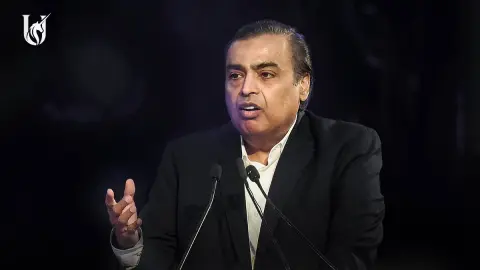
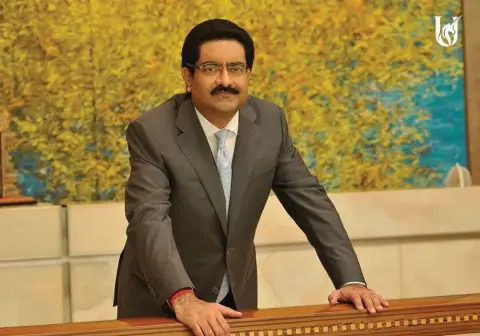
Sunil Bharti Mittal’s journey did not begin with a large company, a big office, or millions in funding.
In 1976, at just 18, he borrowed Rs 20,000 from his father and started making crankshafts for bicycle manufacturers in Ludhiana. It was a small business, but it taught him an important lesson, a good opportunity can come from the simplest place.
That small beginning would eventually lead him to build one of India’s biggest business groups.
Early Life and Education
Born on October 23, 1957, in Ludhiana, Punjab, Sunil Mittal grew up in a family familiar with public life and leadership. His father, Sat Pal Mittal, was a Rajya Sabha member, but Sunil chose a very different path. He studied at Wynberg Allen School and Scindia School before completing his education at Punjab University. Instead of following a traditional career, he was drawn toward business and the freedom to build something of his own.
The First Business Lesson
Sunil and his brothers later started Bharti Overseas Trading Company, expanding beyond bicycle parts into trading. He also entered the generator business and imported portable electric generators from Japan. The business looked promising until the Indian government suddenly banned generator imports in the early 1980s.
For a young entrepreneur, it was a major setback, but it also became one of the biggest turning points of his life.
The Failure That Opened a New Door
With his generator business badly affected, Mittal had to look for another opportunity.
During a visit to Taiwan, he came across push-button telephones at a time when rotary phones were common in India. He immediately saw something others had overlooked: India was ready for better and easier communication.
Instead of seeing his previous failure as the end, he used it as a reason to start again.
Entering the Telecom Business
In 1984, Mittal began assembling push-button phones in India through Bharti Telecom.
The company later expanded into fax machines, cordless phones and other telecom equipment under the Beetel brand. This was much more than a new business for Mittal - it was the beginning of his long relationship with telecommunications. He had found an industry where technology, scale and everyday consumer needs could come together.
The Airtel Idea
The real breakthrough came when India began opening its doors to private participation in mobile telecom.
In 1992, Mittal successfully bid for a cellular licence and partnered with French group Vivendi to strengthen his telecom plans.
In 1995, Bharti launched mobile services in Delhi under the Airtel brand.
What began with a licence and a big ambition would soon become a household name across India.
Building Airtel Around the Customer
Mittal understood that mobile phones could not remain a luxury for a small section of society.
He wanted telecom services to become affordable enough for ordinary Indians to use every day.
Initiatives such as IndiaOne helped reduce STD and ISD costs, making long-distance communication more accessible. Airtel’s growth was driven not only by technology, but by understanding what Indian customers actually needed.
The Outsourcing Model That Changed Telecom
One of Mittal’s smartest decisions was to avoid building everything himself.
Bharti worked with global companies for areas such as network infrastructure and technology services while focusing strongly on customers and the brand. This helped Airtel expand faster without carrying the full burden of a capital-heavy telecom operation. The model later became an important example of how Indian companies could build scale through partnerships.
From India to Africa
Mittal’s ambition was never limited to becoming India’s telecom leader.
Bharti Airtel made a major international move in 2010 by acquiring Zain’s African operations for about $10.7 billion. The deal expanded Airtel’s presence across several African markets and became one of the biggest overseas acquisitions by an Indian telecom company.
It showed that an Indian-born telecom brand could compete on a global stage.
The MTN Deal That Did Not Happen
Before the Zain acquisition, Mittal attempted another massive international expansion.
Bharti Airtel held talks to acquire South Africa’s MTN Group, in a deal that could have been worth tens of billions of dollars. The agreement ultimately failed, but Mittal did not allow the setback to stop his international ambitions. The later Zain acquisition proved that one failed deal does not have to define an entrepreneur’s journey.
The Jio Challenge
Airtel faced perhaps its toughest competitive test when Reliance Jio entered the market in 2016.
Free voice calls and extremely cheap data changed customer expectations and triggered a price war across the industry. Several competitors struggled, while Vodafone and Idea eventually merged to create Vodafone Idea. Airtel survived by changing its strategy, investing in its network and focusing on customers, data and digital services.
Turning Competition Into Growth
The telecom industry became far more competitive, but Airtel continued investing instead of simply retreating. It expanded its 4G and later 5G networks while building services beyond traditional mobile connections. Airtel also strengthened its broadband, enterprise and digital businesses.
The company’s ability to adapt showed why surviving disruption can sometimes be more important than avoiding it.
Building More Than a Telecom Company
Sunil Mittal’s business vision eventually moved beyond mobile services.
Bharti Enterprises expanded into areas including infrastructure, real estate, technology, education and other businesses. The group also became involved in satellite connectivity through OneWeb, reflecting Mittal’s interest in connecting people beyond traditional telecom networks.
The broader strategy has been to build businesses around long-term opportunities rather than short-term trends.
The Bharti Foundation
For Mittal, success has also meant creating opportunities outside business.
Through the Bharti Foundation, the group has supported education and rural schooling initiatives across India. Its Satya Bharti School Program has worked to provide quality education to children in rural communities. This reflects a side of Mittal’s journey that is less visible than Airtel but equally important to his legacy.
Awards and Global Recognition
Sunil Bharti Mittal’s contribution to Indian business has earned recognition in India and around the world. He received the Padma Bhushan in 2007 for his contribution to trade and industry.
He has also received several international business and telecom awards during his career.
In 2024, King Charles III conferred an honorary KBE on Mittal, recognising his contribution to global business and philanthropy.
Sunil Mittal’s Net Worth
Sunil Bharti Mittal is now counted among India’s wealthiest entrepreneurs, with much of his wealth linked to the Bharti group and Airtel. Estimates of his and his family’s wealth vary depending on share prices and the holdings included in the calculation. The figures supplied for this story place the family’s estimated wealth between $25.6 billion and $34.2 billion.
His wealth, however, represents decades of business building rather than a quick success story.
Airtel’s Massive Scale
Bharti Airtel has grown from a new mobile operator in Delhi into one of the world’s major telecom companies. The company now serves hundreds of millions of customers across India and international markets. Based on the figure provided, Airtel’s market capitalisation is approximately Rs 11.04 lakh Cr.
Its scale today makes the journey from a Rs 20,000 bicycle-parts business even more remarkable.
The Man Behind the Numbers
What makes Sunil Mittal’s story interesting is not simply the size of his wealth or Airtel’s valuation.
It is the number of times he had to change direction before finding the opportunity that transformed his life. He moved from bicycle parts to generators, from generators to telephones, and from telephones to mobile networks. Each setback pushed him closer to the business that would define his legacy.
The Vision Behind Airtel
Mittal’s biggest strength has been his ability to recognise where India is heading before the opportunity becomes obvious to everyone. He understood that mobile communication would move from being expensive and exclusive to becoming part of everyday life. He also understood the importance of scale, partnerships and customer affordability.
That vision helped Airtel grow from a new telecom brand into a global communications company.
Lessons From Sunil Bharti Mittal
Sunil Mittal’s story offers a simple lesson: never become too attached to one business idea.
When generators failed, he looked elsewhere. When telecom changed, he changed with it.
He took calculated risks, built partnerships and kept looking for the next big opportunity.
For entrepreneurs, his journey proves that sometimes the biggest success begins with the courage to start again.
From Rs 20,000 to a Global Empire
Sunil Bharti Mittal started with a small loan, a simple manufacturing idea and the willingness to take a risk. Decades later, his name is closely associated with Airtel, one of India’s most recognisable brands. His journey from a bicycle-parts business in Ludhiana to a global telecom empire is a story of resilience, timing and bold thinking.
More than anything, it shows how a small beginning can become extraordinary when an entrepreneur keeps moving forward.