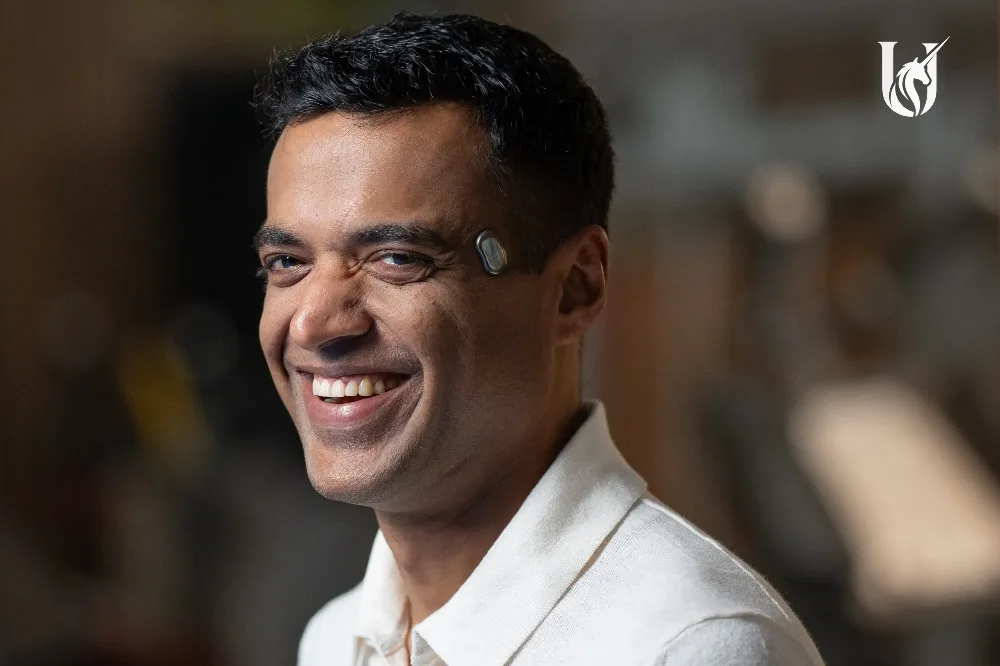
There are entrepreneurs who build businesses, and then there are entrepreneurs who change the way an entire country lives. Deepinder Goyal belongs to the second category.
Long before food delivery became a habit for millions of Indians, ordering from restaurants was a frustrating experience. Printed menus were outdated, phone calls took forever, and discovering new restaurants depended largely on word of mouth. Deepinder saw this everyday inconvenience not as a minor problem but as an opportunity waiting to be solved.
What began as a simple digital menu-sharing website inside an office eventually evolved into Zomato, one of the world's largest food-tech companies. Today, operating under Eternal Ltd, the company has expanded far beyond restaurant discovery into quick commerce, B2B restaurant supplies, live experiences, and digital commerce, with a market capitalisation of nearly Rs 2.68 lakh crore (around $32 billion) as of July 2026.
This is the remarkable story of how Deepinder Goyal transformed a workplace observation into one of India's biggest startup success stories.
A Middle-Class Childhood That Built Big Dreams
Deepinder Goyal was born on 10 January 1983 in Muktsar, Punjab, into a middle-class family where education was considered the strongest investment. His father worked as a school teacher, while his mother managed the household.
Growing up, success wasn't measured by wealth but by hard work and discipline. Those early lessons stayed with him throughout his entrepreneurial journey.
Gifted in mathematics, Deepinder secured admission to IIT Delhi, where he pursued Engineering in Mathematics and Computing. More importantly, IIT exposed him to problem-solving at scale, a skill that would later define his career.
After graduating in 2005, he joined global consulting firm Bain & Company, where he worked with multinational clients and learned how businesses operate. Ironically, it was inside Bain's cafeteria, not a startup garage, that the idea for Zomato was born.
The Office Menu That Changed Everything
Every afternoon, Deepinder noticed the same scene unfold.
Employees crowded around restaurant menus, waiting for someone to finish browsing before they could place an order. The process was slow, inconvenient, and inefficient.
Instead of accepting it as routine, he asked a simple question:
"Why aren't these menus available online?"
He scanned restaurant menus and uploaded them onto a small internal website for his colleagues.
The response was immediate.
People loved the convenience.
Soon, friends outside the office began requesting access. Restaurants noticed increased visibility. What started as an office experiment suddenly looked like a real business opportunity.
Sometimes, billion-dollar companies don't begin with revolutionary inventions, they begin by solving everyday frustrations.
Foodiebay: The First Step Towards Something Bigger
In 2008, Deepinder partnered with his Bain colleague Pankaj Chaddah to launch Foodiebay.
The platform allowed users to browse restaurant menus, discover eateries, and read reviews without making endless phone calls.
Within months, Foodiebay became one of Delhi NCR's most popular restaurant discovery platforms.
The founders realised they weren't simply building a directory.
They were creating India's digital food ecosystem.
Why Foodiebay Became Zomato
As the platform expanded, Deepinder realised the original name had limitations.
"Foodiebay" sounded too similar to eBay and lacked a unique global identity.
In January 2010, the company was rebranded as Zomato, a short, memorable, globally scalable brand.
The decision would prove transformational.
Today, "Zomato" is recognised across continents and has become synonymous with food delivery in India.
Building Trust Before Delivering Food
Unlike many food delivery companies that started with logistics, Zomato initially focused on information.
The platform invested heavily in:
- Restaurant listings
- Verified menus
- Honest customer reviews
- Ratings
- Food photography
Instead of selling food first, it built consumer trust.
That trust later became Zomato's biggest competitive advantage when it entered online ordering.
The Difficult Years Nobody Talks About
Success wasn't immediate.
Funding was limited.
Restaurants were sceptical.
Consumers were unfamiliar with ordering food online.
Building a nationwide restaurant database required thousands of manual visits.
Every city meant starting from scratch.
Every restaurant needed convincing.
Many believed Indians would never order meals through mobile apps.
Deepinder ignored the scepticism and continued expanding patiently.
Those early years became the foundation of everything Zomato would later achieve.
The Smartphone Revolution Arrives
India's smartphone boom changed everything.
As internet penetration increased, restaurant discovery moved from desktops to mobile apps.
Zomato quickly adapted.
Its clean interface, restaurant recommendations, customer reviews, and seamless experience attracted millions of users.
The company didn't just follow digital adoption, it accelerated it.
By the mid-2010s, Zomato had become India's preferred restaurant discovery platform.
From Discovery to Delivery
Deepinder knew restaurant discovery alone wasn't enough.
Consumers wanted convenience.
Restaurants wanted more orders.
The obvious next step was food delivery.
Zomato entered online ordering, connecting restaurants with delivery partners and customers through a single digital ecosystem.
It fundamentally changed how India ordered food.
Soon, millions of meals were being delivered every month.
Thinking Beyond India
Unlike many startups focused solely on domestic growth, Deepinder pursued global expansion early.
Zomato entered markets including:
- United Arab Emirates
- United Kingdom
- South Africa
- New Zealand
- Turkey
- Brazil
- Sri Lanka
- Qatar
- Philippines
The company gradually expanded to operations across more than 20 countries, proving that Indian startups could build globally recognised consumer brands.
Competing in India's Toughest Startup Battle
India's food-tech industry quickly became intensely competitive.
Global players entered.
Domestic rivals expanded aggressively.
Discount wars intensified.
Margins shrank.
Investor pressure increased.
Deepinder refused to compete only on discounts.
Instead, Zomato focused on:
- Better technology
- Improved customer experience
- Strong restaurant relationships
- Efficient logistics
- Brand building
This long-term thinking helped Zomato emerge as one of India's strongest consumer internet companies.
The Pandemic That Tested Everything
COVID-19 brought the restaurant industry to a standstill.
Orders collapsed overnight.
Thousands of restaurant partners struggled.
Delivery operations became uncertain.
Rather than retreat, Deepinder pivoted.
Zomato introduced:
- Contactless delivery
- Grocery delivery
- Safety-first logistics
- Restaurant support initiatives
The crisis became one of the company's defining leadership moments.
Instead of merely surviving, Zomato emerged stronger.
India's Landmark Startup IPO
In 2021, Zomato became one of India's most anticipated technology IPOs.
The listing marked a historic moment for India's startup ecosystem.
It demonstrated that venture-backed technology companies could successfully enter public markets and create long-term shareholder value.
For countless entrepreneurs, Zomato's IPO became proof that global-scale startups could be built from India.
Building More Than a Food Delivery Company
Deepinder never wanted Zomato to remain a single-product business.
The company expanded into multiple verticals.
Blinkit
Following its acquisition, Blinkit strengthened Zomato's position in quick commerce, enabling deliveries beyond restaurants.
Hyperpure
Hyperpure supplies high-quality ingredients directly to restaurants, improving consistency across the food ecosystem.
District
The company entered experiences and live events, broadening consumer engagement beyond meals.
Recognising this broader vision, the parent company was renamed Eternal Ltd in 2025, reflecting ambitions that extended well beyond food delivery.
Leadership Built on Obsession with Detail
Deepinder's appearance on Shark Tank India introduced millions to his management style.
During one startup pitch, he noticed a promotional banner displaying a nine-digit phone number instead of ten.
It was a tiny mistake.
But to him, it reflected something much larger, attention to detail.
That same obsession has shaped Zomato's product design, technology, operations, and customer experience.
For Deepinder, excellence isn't achieved through one big decision; it's built through thousands of small ones.
The Numbers Behind Zomato's Rise
Zomato's growth reflects years of disciplined execution.
- Founded in 2008 as Foodiebay
- Rebranded to Zomato in 2010
- Expanded across multiple international markets
- Crossed 1 billion food deliveries
- Served over 800 Indian cities
- Built a network of hundreds of thousands of restaurant and delivery partners
- Raised nearly $3.4 billion across multiple funding rounds
- Raised Rs 8,500 crore through a Qualified Institutional Placement in 2024
- Parent company Eternal reached a market capitalisation of approximately Rs 2.68 lakh crore ($32 billion) by July 2026
Deepinder Goyal himself owns a significant stake in the company, with an estimated personal net worth of around Rs 8,300 crore, making him one of India's most successful self-made technology entrepreneurs.
Challenges That Made Him Stronger
Deepinder's journey wasn't free from setbacks.
He navigated:
- Funding uncertainty
- Fierce competition
- International expansion failures
- Regulatory changes
- Pandemic disruption
- Investor expectations
- Public market scrutiny
Every obstacle forced Zomato to become more resilient, efficient, and customer-focused.
Lessons Entrepreneurs Can Learn from Deepinder Goyal
The story of Zomato offers valuable lessons for every founder.
Solve everyday problems. Billion-dollar ideas often emerge from simple inconveniences.
Start before everything is perfect. Foodiebay began as a small experiment.
Build trust before monetisation. Credibility became Zomato's greatest competitive advantage.
Adapt constantly. The company evolved from restaurant discovery to food delivery, quick commerce, and a broader digital ecosystem.
Obsess over details. Small improvements create extraordinary customer experiences.
Stay resilient. Every major breakthrough came after periods of uncertainty.
Think beyond today's business. Deepinder always built for the next decade, not the next quarter.
A Legacy Still Being Written
Deepinder Goyal didn't simply build another food delivery app.
He transformed how millions of Indians discover restaurants, order meals, shop for essentials, and experience digital convenience.
From scanning office menus to leading one of India's most valuable technology companies, his journey reflects the power of curiosity, disciplined execution, and long-term thinking.
As Eternal continues expanding into new categories, Temple, Deepinder's vision remains unchanged: to build products that simplify everyday life through technology.
His story proves that extraordinary companies rarely begin with grand plans. They begin with someone willing to notice a problem that everyone else has learned to ignore, and determined enough to solve it.